The collections

Collection management aims to look after the cultural heritage for future generations and includes all activities and measures that ensure that the collections are looked after, documented and made available to the general public. The museum's collections today consist of more than 90,000 objects, 2.65 million photographs, 140,000 books and periodicals and 1,150 shelf meters of archive space.
The collection work in 2018 has, alongside the ongoing management work, been focused around the handover of the Telemuseet, intake of the technical-historical collection from NRK, management of the Medical Museum's collection, and digitization and making DEXTRA Photo available.
Transfer of the Telemuseet
The Telemuseet's collections were incorporated into The Norwegian Museum of Science and Technology at the turn of 2018 through a business transfer. The collections consist of approximately 20,000 objects, 450,000 photographs, 400 shelf meters of archives as well as technical drawings, film, sound and other material. In addition, the museum took over a specialist library of 6,000 volumes, a collection of forms and advertisements and a large collection of props. The bulk of the Telemuseet's collections are registered and published on DigitaltMuseum. The collections are stored in a 2,500 m² mountain hall.
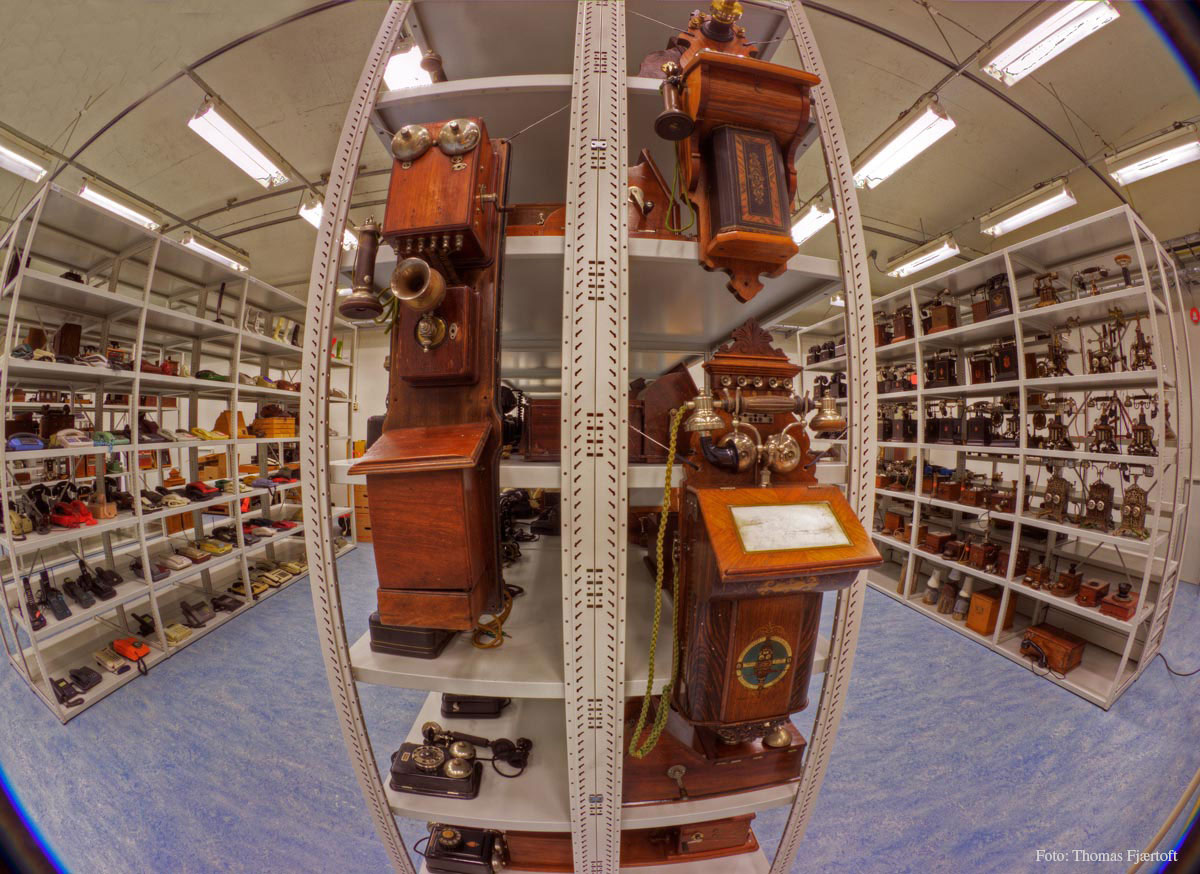
Four former Telemuseum employees were given positions at The Norwegian Museum of Science and Technology . The museum's staff has therefore been strengthened with a conservator, department head for communications and marketing, a museum librarian, a collection employee and a dedicated object conservator for the collection.
The Telemuseet has operated an extensive regional operation with exhibitions and collections throughout the country. Rundemanen, the Bergen radio transmitting station with engine house from 1912, and the collections in Tromsø broadcasting station at Langnes, are the largest. A survey has been carried out of which obligations and agreements The Norwegian Museum of Science and Technology has taken over in relation to the regional operation.
The Telemuseet and The Norwegian Museum of Science and Technology have had the same registration system for objects, photographs, film and sound. The merger of the two bases was completed in 2018. The Telemuseet and The Norwegian Museum of Science and Technology do not have the same library system, so a conversion from the Telemuseet's Tidemannbase to the Teknisk musum's ALMA will take place during the first half of 2019.
The round mane

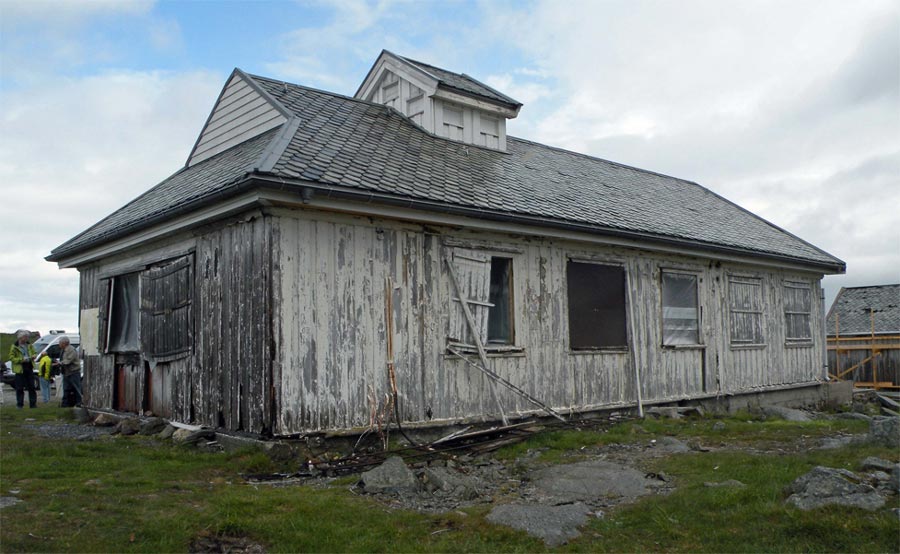
Rundemanen before and now. Photo: Thomas Fjærtoft.
Part of the legacy of the Telemuseet are the two listed buildings at Rundemanen , Bergen radio transmitting station with engine house. This is The Norwegian Museum of Science and Technology 's only antiquarian building complex. The transmitting station and engine house were restored externally in 2012 by the Telemuseet in collaboration with the Bergen City Antiquarian. In 2018, interior restoration and painting of the facade began. In 2019, we will try to get a dissemination offer, preferably in collaboration with Museum Vest.
Intake of NRK's technical-historical collections
In 2017, the museum entered into agreements with NRK on the transfer of objects and documentation from NRK's technical-historical collections. Microphones, TV cameras and other equipment show a media technical development of which NRK has been a central part. From October 2017 to September 2018, the museum took over approximately 1,300 objects and extensive archive material. In NRK's warehouse at Alnabru, the museum established a work line for selection, registration, condition assessment, treatment, photography and packaging of the objects. At the same time, NRK's staff and history group contributed valuable expertise. The objects were made available to the public through DigitaltMuseum, and the project was disseminated through radio, television, online articles, social media and lectures. The agreements with NRK also involve further cooperation related to their technical-historical collections.

Digitization of DEXTRA Photo
In 2018, the main focus in the management of the collection has been on two areas: further development and streamlining of the digitization and cataloging work and making it available at the DigitaltMuseum. The digitization work at the museum must combine the highest possible quality that does justice to the original material with resource-efficient production. In 2018, the museum has therefore invested in additional equipment that handles large volumes. Furthermore, the database work has been optimised. In 2018, the museum has advised other museums, had study visits and hosts in digitalisation.
In 2018, a total of 22,121 photographs from DEXTRA Photo were published at DigitaltMuseum. These have been downloaded in good resolution 3,525 times for free use.
DEXTRA Photo and the museum are one of four main partners in the book and research project Norwegian Photo History from 1940 to 2011. The project is supported by the Norwegian Culture Council and the Norwegian Photographers' Association. Both the object and photo collections in DEXTRA Photo will play a key role here with sub-projects linked to, among other things, image agencies and advertising photography. The project started in 2018 and will continue until 2021.
DEXTRA Photo is owned by Sparebankstiftelsen DNB and is deposited at the museum.

Management of the Medical Museum's collections
One of the most important tasks for the museum is to collect and look after health and medical historical artefacts, photographs, books and archives.
In 2018, these collection projects have been ongoing:
- Conservation and cataloging of human material in the museum's collections.
- Registration of and acquisition of documentation on the University's surgical instrument collection - a collection of around 2,000 individual objects from the 19th century. Work on this collection will continue in 2019, and will be carried out in collaboration with the University of Oslo and other institutions that own or have worked on parts of the collection.
- Review and cataloging of photographs from the Rikshospitalet in collaboration with retired senior obstetrician Per Børdahl.
- The private archives of Harald Natvig and Aase Marit Olsen have been arranged, cataloged in the museum's internal system Asta and published on the Archive Portal.
The collections at the museum must be available both for use and dissemination in the museum and for the general public in general for research and dissemination. DigitaltMuseum is the museum's most important publication channel for the collections and the museum publishes registration data and photographs with as open rights as possible to ensure the greatest possible use. At the end of 2018, 33,767 objects and 67,116 photographs are available at DigitaltMuseum. Photographs from Oslo are also available on the website www.oslobilder.no .
The museum uses central joint services within collection management, such as the websites kulturnav.org, digitaltmuseum.no, oslobilder.no and the Primus database. In 2018, the museum prepared common guidelines for the use of Primus, increased use of accessions in accordance with recommended standards from the collection management system SPECTRUM and KulturNav. KulturNav is a website for creating, managing and sharing common open terminology and authorities for use in the collection database Primus. The museum has permanent responsibility for two authority registers. These are: the personal register Persons Industrial History and the organizational register Industrial Companies. In addition, the museum has been responsible for the organizational register of photography companies in 2018.
Audio and video will be available
In 2018, the National Library was commissioned by the Ministry of Culture to prepare a plan for the digitization of film and audio material in Norwegian museum collections. We have worked closely with the library as a pilot institution in the actual mapping work and in 2019 the museum will be a pilot for the digitization itself.
The museum has collected sound and film material from the 1920s until today both as examples of various techniques and technologies and because of the content. The material collected as technological examples is incorporated into the artefact collection, while the documentary material is incorporated into the archives. This has led to different registration practices and storage conditions. There is an extensive backlog in the registrations of film and sound and little material has been digitised.
Lending and borrowing of museum objects
The museum lends objects and archival material for exhibitions at museums at home and abroad. In 2018, the museum lent objects to, among others, the National Museum of Art, Architecture and Design , Norwegian Folk Museum, Oslo Museum, Fram Museum, KRIPOS, University of Oslo, Jeløy Radio, Jernbanemuseet, Justervesenet, Moss City and Industry Museum, NVE, Ringve Museum, Norwegian Road Museum, Norwegian Hermetic Museum, Railway Museum, NRK, Norwegian Aviation Museum, Spillum Steam saw and planer, Sørvågen telegraph station, Jewish Museum and Arithmeum in Bonn, Germany, Telecommunication and pilot museum in Lødingen. Some of the loans have also included courier services and assistance with assembly. In total, the museum has 55 active lending cases to other institutions.
Library
The library contains one of Norway's largest collections of technology and industrial history literature, in addition to an extensive collection of medical history and science history literature. The library has 140,000 registered volumes of books and periodicals.
Archives
In 2018, the museum took over several archives, the most important of which are the collections from the Telemuseet, the object archive from NRK, the Julsrud archive from NRK and Hofgaard's private archive regarding early computer technology. Previous archive entries have been arranged and registered in Asta, such as Dovre, the Bakelittfabrikken and the private archive after Erik Tandberg.
The museum's archive includes private archives created by Norwegian companies and players in industry, technology, telecommunications, natural sciences and medicine. The private archives comprise around 1,150 shelf metres. The museum also has a large drawing archive and an extensive brochure and clip archive.

Preservation
The conservation measures at the museum are linked to the exhibition, loan and collection management work and priorities are made based on the state of preservation. The climate in all magazines and showrooms is logged and objects are exhibited in climate-controlled stands where necessary.
In 2018, the museum acquired a mobile heating chamber for insect remediation. Objects will be heated to a sufficiently high temperature to kill live insects, larvae, pupae and eggs. At the same time, the chamber will automatically regulate the relative humidity (RH%) so that damage to the objects is avoided. The heating chamber is based on a 30-foot container for easy transport and is the largest mobile facility of its kind in Norway. The facility can be rented out to other museums.
Key figures for the collection work
| Year | 2018 | 2017 | 2016 | 2015 | 2014 |
|
Number of items estimated |
91 611 |
60 000 |
60 000 |
60 000 |
60 000 |
|
Reg items in Primus |
76 611 |
49 560 |
48 768 |
47 782 |
45 509 |
|
Reg. items current year |
27 051 |
792 |
986 |
2 273 |
276 |
|
Published items DigitaltMuseum |
33 767 |
16 148 |
15 862 |
15 810 |
12 596 |
|
Number of photographs (estimate) |
2 650 000 |
2 200 000 |
2 200 000 |
2 200 000 |
2 200 000 |
|
Reg. photo in Primus/photo station |
160 302 |
102 654 |
74 256 |
68 542 |
64 807 |
|
Reg. photo current year |
57 648 |
28 398 |
5 714 |
3 735 |
1 666 |
|
Published photographs DigitaltMuseum |
67 116 |
43 090 |
42 140 |
24 772 |
19 621 |
|
Number of archives |
478 |
128 |
126 |
_ |
_ |
|
Registered archives in Asta |
391 |
25 |
23 |
_ |
_ |
|
Registered archives in the current year |
366 |
2 |
_ |
_ |
_ |
|
Published archives on the Archive Portal |
31 |
15 |
11 |
_ |
_ |
