
Mediation
Dissemination, learning and events
The aim of the outreach program is to give the public insight into, deepening and excitement about the museum's exhibitions on technology, science and medicine. The exhibitions are accompanied by an exciting communication program with tours and a wide and varied selection of events.
Learning offers for schools and kindergartens
The school offer is a central part of the business and extends from pre-school, primary school, upper secondary school to adult education. All teaching offers are developed based on the school's curriculum. Dialogue, activity and inspiration are important in the museum's teaching programme.
The school offer covers several subject areas, such as history, medicine, social studies, natural sciences and maths. One of the main initiatives was the schools' science recruitment. The most popular theme was astronomy, which included the offers Planetarium, Astroamp and Stars in sight. Other popular offers were tours of industrial history and the history of medicine.
Creator's workshop
Oslo Science Centre 's workshop is used for various types of teaching, where all programs emphasize student activity, creative joy and collaboration. In connection with the opening of a new creative workshop, TeknoLab, four new teaching schemes have been tested. These combine new technology with creative joy. In Teknoteket, a new teaching scheme has been developed, which uses weaving, an old craft technique, as a starting point.

Programming
During the last year, teaching in programming has been offered to children from nursery age to upper secondary school. Our niche is that we take coding off the screen and into the physical world. What you program on the screen has an effect on something physical, such as 3D models, patterns, robots, musical instruments and cars.
Investment in Oslo east
Oslo Science Centre is the regional science center for Oslo and its surroundings, which means that the science centre's area of responsibility extends beyond the museum building at Kjelsås. Based on public surveys, it can be determined that there are large groups of the city's population who do not visit the museum today. In order to reach new potential visitor groups, it is important to be visible in the neighborhoods where people live. The museum has therefore entered into a collaboration agreement with Deichmanske, where science shows and creative activities are held outside in several of the library branches in Oslo south and Oslo east. This means that the museum, via the library, reaches a part of the population that today does not feel ownership of the museum, and in the long run this initiative may lead to an increase in visitors to the museum from the relevant urban areas.
Kindergarten
The teaching offer for kindergartens has increased significantly, and has been in continuous development. The teaching programs have received good feedback and the main theme aimed at kindergartens has been mathematics.
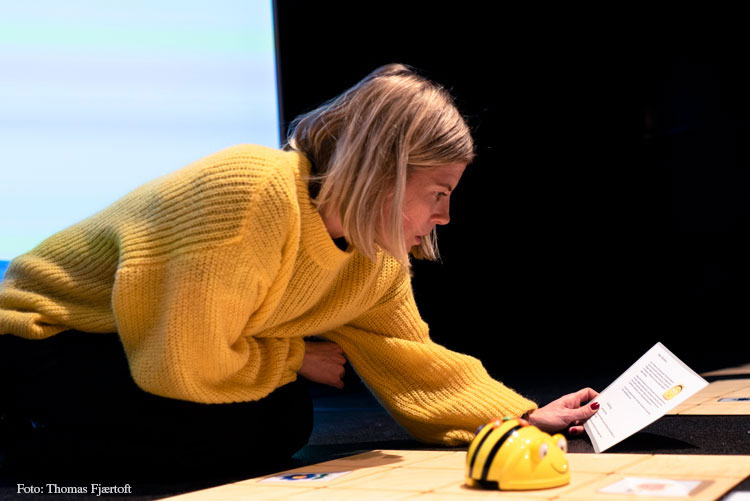
Teacher's course
The main focus on teacher courses has been science courses for kindergarten staff and courses in programming and creative workshops in schools. The courses have received extremely good feedback. What the courses have in common is that they are activity-based, where the participants participate actively. In addition, the second round of the continuing education Programming and creative workshop in schools was carried out. The continuing education runs throughout the school year 18/19, is a collaboration with OsloMet, and combines day courses on various topics with a week of practice in the creative centers.
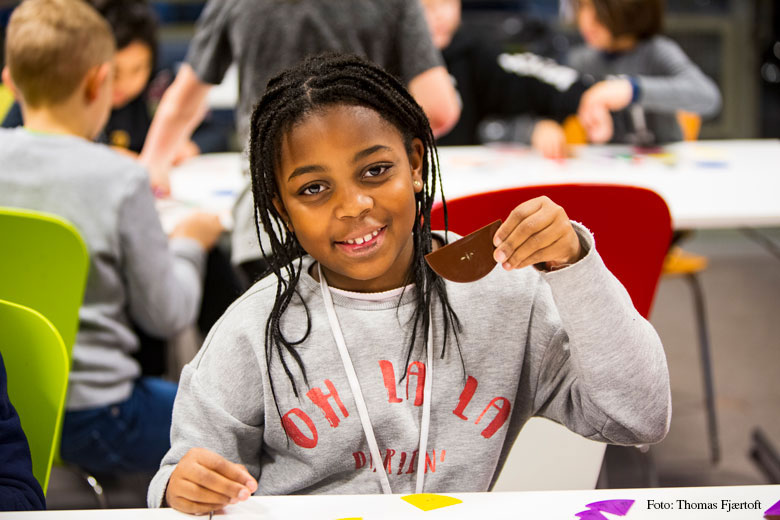
Mathematics
For the first time in several years, the museum again offers mathematics lessons. New mathematics activities have been established for kindergarten, junior high school and 3rd-4th grade. class. The aim is to make mathematics concrete and playful.
- The creator's workshop is a fantastic offer for children and young people, but also for teachers who can come here and learn more. It's basically about today's young people having to understand technology, but also help create technology, not just consume technology. I believe that what we see here will put the students in a better position to help solve many of the future's puzzles, says Minister for Knowledge and Integration Jan Tore Sanner.
Weekend and holiday programme
The weekend and holiday program 2018 contained a large selection of activities with several newly developed schemes aimed at a family audience where play and learning are central. A clear goal has been to link activities thematically to the museum's core activities.
- Kodepine Emma taught the music coding program Sonic Pi, Political game workshop with Kristina and Ole Haley, Summer workshop with the organization ByVerkstedet where the public could make bird boxes, boom boxes or gym bags, in collaboration with a sewing workshop. With RELOVE, soft stuffed animals were made from recycled materials and textiles from Hjula Væveri.
- Theme weekends were held with new activities that convey technology, history or science, such as the Feminist animation workshop, where the public could give the women a voice by making an animation clip about them. In connection with the exhibition PEOPLE, research into human biological variation was taken up for the little ones, with the story of Abrakasebra who was frozen out of the village because Gunnar the goat and the other animals did not trust striped animals. A new astronomy show was developed with experiments and simulations that seek answers to the universe's greatest secrets such as life on other planets, the sun and space rockets. Other activities were Laser crawling, Rubber propeller boat, LEGO WeDo, Did you know that... and not least French planes.
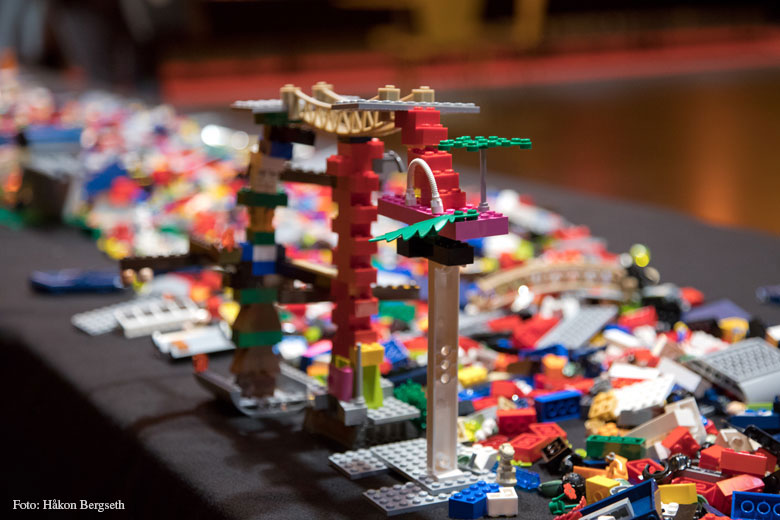
- BUILD THE CHANGE was held for the eleventh time, where the theme was LEGO LOVE and visitors could frolic in a ton of LEGO bricks and build something they love.
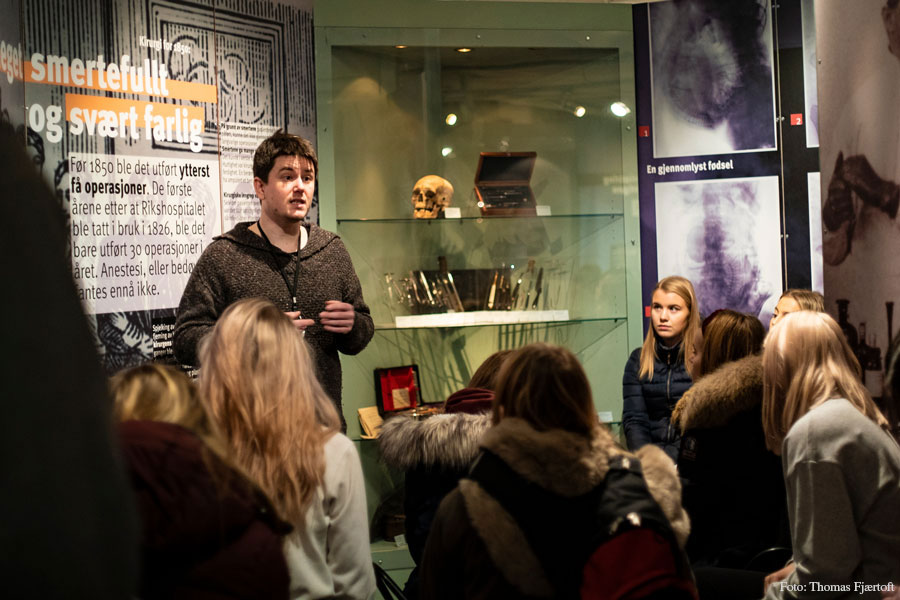
Medicine
In 2018, the museum has offered seven different educational opportunities in medicine. The offer extends from kindergarten to high school students. The offer has consisted of; Infectious (kindergarten), Skeleton and Body is great (primary school), BLOD (middle school), Skeletons in the closet, Clean and unclean (high school). FOLK (middle school and high school). In the dialogue-based educational program FOLK - from racial types to DNA sequences, students are challenged to reflect on historical and contemporary research on human biological differences. The sound installation Lyden av FOLK, developed in collaboration with Grorud Youth Council, enables creative interaction to express themselves on topics in a sound image.
The teaching program Clean and unclean is adapted to the Health and care line in vocational subjects and was the most popular teaching offer at the museum in 2018 with 104 tours in total. This offer has become an integral part of several schools' teaching in hygiene in VG1 Health and care.
In total, 3,630 students and teachers participated in a teaching offer within medical topics in 2018, divided into 185 tours, which is a slight increase from 2017.
27 groups participated in Meeting with Memories, a tailored service for people with dementia, which has existed since 2009. The tours are based on cultural historical objects that can strengthen people's memories and start a dialogue. Two different experiences are offered: Folk og fiff i farten, about bicycle trams, royal cars and Caravelles, and De nære ting, about houses and homes from the interwar period to the present day. A new program has also been tested and will be offered from January 2019; God helg about music and nightlife, sports and leisure, Saturday treats and radio from the 1940s-70s. A total of 133 users have participated in this in the past year. The service is a collaboration between The Norwegian Museum of Science and Technology , Geriatric Resource Center and the Oslo Municipality Health Agency.
Events and conferences
The museum prepares an event program for current exhibitions, research, archives and collections. The program takes the form of curator tours, city walks, debates and dialogic conversation formats, lectures, workshops, concerts, film screenings and festivals. In addition, the museum has a large activity program aimed at families, children and young people. A selection of the museum's diverse public events and conferences.
LATE
SENT is a well-integrated evening concept with an 18-year age limit that mixes research dissemination, popular entertainment and more experimental stage formats with workshops, DJ and bar. In February, 500 people gathered at the SENT museum on the topic of beer with lectures on traditional brewing, a yeast lesson and the opportunity to participate in a brewing workshop. Labels, film and photos were shown and conveyed vividly from brewery books and yeast journals from the museum's historical archive after the Oslo Breweries. A student choir performed beer songs and a student brewing guild held a quiz.
Fix party
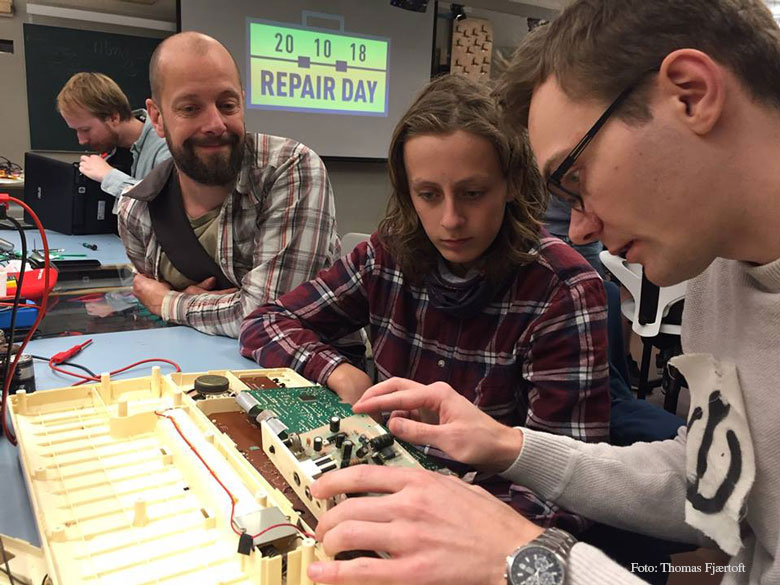
In 2018, the museum's visitors could experience the magic of repair in the newly opened, well-equipped TeknoLab. In collaboration with Restarters, two fixing parties were arranged. At SENT during the LEGO Festival, visitors were invited to bring their old and beloved electronic products, to screw up, explore and repair them. The following weekend, the children also got to fix their own electric toys. Restarters provided a group of volunteer "fixers" and the museum with the tool.
The Chemistry Festival
On the first weekend in November, young and old could follow popular science lectures about chemistry in everyday life in the museum's pop-up science cafe. Among other things, they heard about good chemistry, the chemistry in coffee and other molecular gastronomy, poop, pee and farts in the periodic table, plant dyeing in industry and the chemistry in the technical conservation of museum objects.
At the chemistry square, visitors could experiment themselves and see demonstrations from staff at the museum and the school laboratory in chemistry, at the University of Oslo (UiO). In addition, photo archivists at the museum facilitated a workshop in cyanotopy, an ancient photographic copying technique. The chemistry festival was organized in collaboration with UiO and the Norwegian Chemical Society.
Researchers' Night
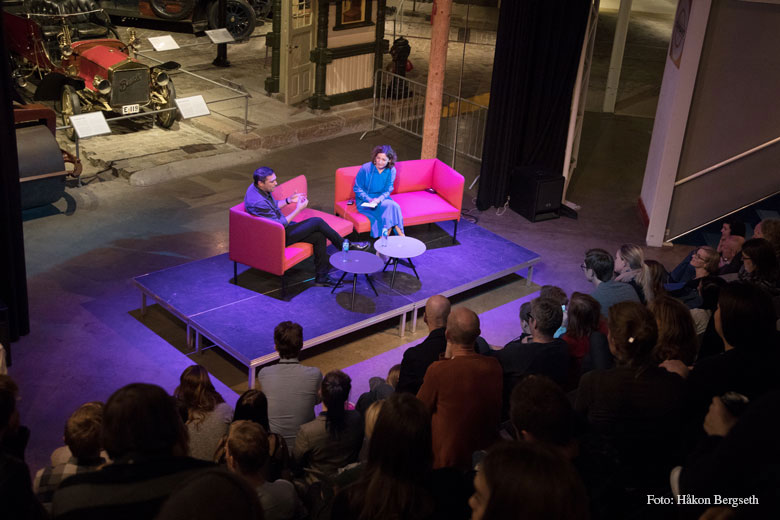 Senior curator at the Medical Museum, Ageliki Lefkaditou, in conversation with author and geneticist, Adam Rutherford. Photo Håkon Bergseth.
As part of the research days and European Researchers' Night, we organized Researchers' night – Making Sense Together, in collaboration with the Museum for University and Science History (MUV), UiO. The event was an interdisciplinary researcher's night with thematic anchoring in the newly opened exhibition PEOPLE — from racial types to DNA sequences, and other ventures at the Medical Museum. Researchers and visitors were invited to workshops and dialogic discussion tables in the exhibitions, and an on-stage conversation between author, geneticist and BBC presenter Adam Rutherford and curator of FOLK Ageliki Lefkaditou. There they took part in two artistic interventions, a guided tour and a dialogical DJ set. The event was supported by the Research Council of Norway.
Listen to the conversation DNA gap: What's missing in the history of everyone who has ever lived? with Ageliki Lefkaditou and Adam Rutherford:
Medical rooms
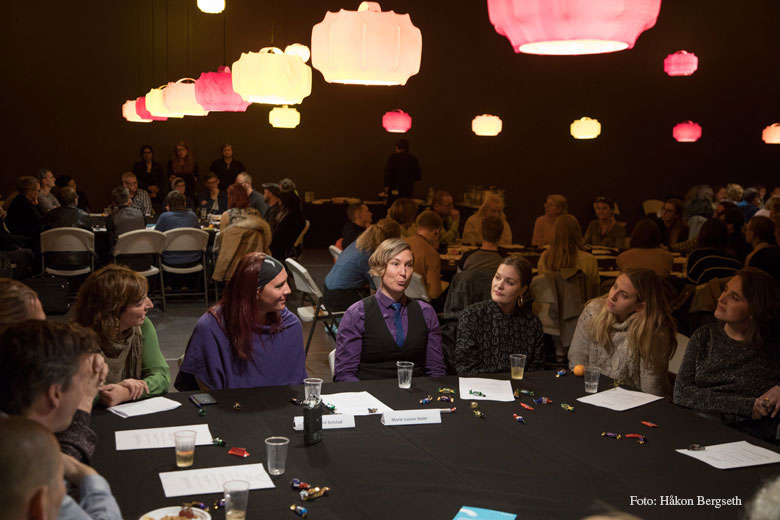
In October, Medisinske rom opened, a completely new arena for open, safe, in-depth conversations between visitors and professionals about questions related to medicine, health and society. The conversation series builds on the dialogical conversation tables the museum has offered during events in recent years. First event in the Medical Rooms series. The power of diagnosis addressed gender diversity and the power of diagnosis about transsexualism, gender identity, diagnosis and treatment. Invited guests with expertise in activism, medicine and historical research led, together with moderators from the museum, small group conversations for the nearly 100 visitors. The event was supported by Fritt Ord. Medical rooms is also an upcoming exhibition that will open in the Medical Museum in 2020.
- I would like to praise the museum, which creates these new conversation rooms for us. I have gained a completely new view of what a museum should and can really do. Thank you very much, says Janecke Thesen, general practitioner in the specialist group for LGBT health in the Medical Association.
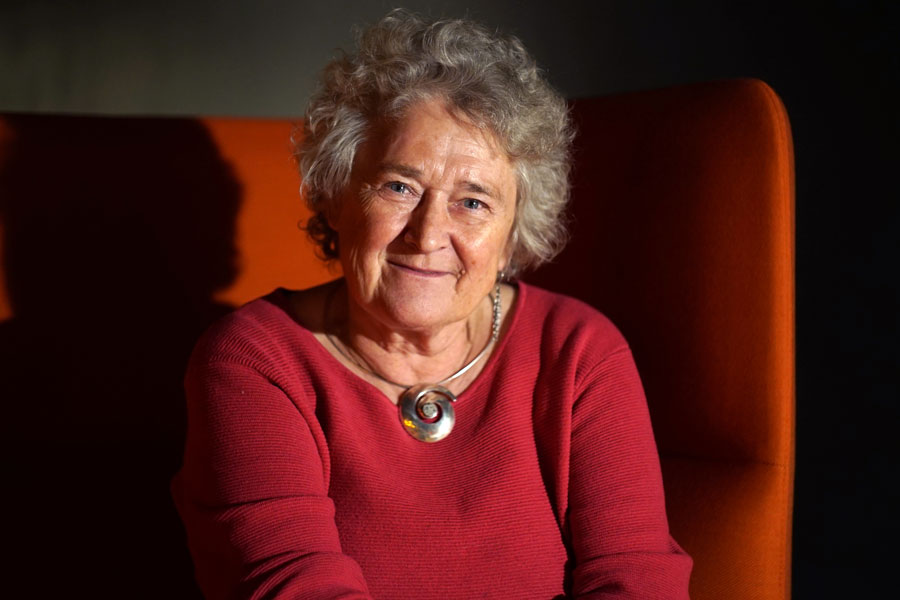 Janecke Thesen from the professional group for LGBT health (lesbian, gay, bisexual and trans health) in the Medical Association during the event. Photo Thomas Fjærtoft.
A selection of other events
The major exhibition PEOPLE – from racial types to DNA sequences, opened in March with lectures, artistic performances and a three-day international research conference. During the spring, a series of themed tours were organized, including Race: a dangerous myth?
Furthermore, International Museum Day used to raise the responsibility of museums in the event Doing and undoing race at the museum, and during the Cultural Heritage Days 2018, the award-winning film Familiebildet, which tells the story of hidden Sami identity, was shown, and the audience was able to meet filmmaker Yvonne Thomassen.
The exhibition Power Outages – Are You Prepared? opened with the Homeric seminar in collaboration with the Norwegian Institute for Consumer Research (SIFO). The exhibition The Vocational Trades of the Future, under the auspices of the Ministry of Education and Research, took place at the museum, and was one of the government's celebrations of the Year of the Vocational Trades.
In the exhibition Grossraum – Organization Todt and Forced Labor in Norway 1940-1945, curatorial tours were held about Hitler's polar railway and about Albert Speer's activities in Norway.
The museum celebrated the 80th anniversary of the popular craft and industry exhibition Vi kan with the Women's Student Singing Association, lectures and presentations of sources from the archive.
{source}
<!-- You can place html anywhere within the source tags -->
<iframe width="560" height="315" src="https://www.youtube.com/embed/NE83UZTtYCM" frameborder="0" allow="accelerometer; autoplay; encrypted-media; gyroscope; picture-in-picture" allowfullscreen></iframe>
{/source}
Labour Day was celebrated together with the Workers' Museum and the European Route of Industrial Heritage with dancing at the Sailcloth Factory on the Akerselva River, synchronized with 33 other industrial monuments in Europe.
A guided bus tour of a selection of Oslo's concrete architecture, starting from the archive of Teigen's photo studio, was the highlight of the archive day on November 10th.
Oslo Maker Festival was organized in collaboration with Deichmanske Library, Tekna, Norway Makers and the National Center for Science Recruitment at Deichmanske Main Library. Micro:bit Party, a two-day hackathon, was organized in collaboration with Norway Makers, Kodeklubben Oslo and Open Zone for Experimental Informatics at UiO. We offered family-friendly exploratory activities for 600 visitors during Oslo Culture Night and the Crime Laboratory - a week of forensic activities for schoolchildren and other visitors.
In the spring, the children's musical Bydyra performed by Tusmørke in the exhibition Music Machines, and in the autumn, several concerts were arranged by Captain Credible on his locally built instrument in TeknoLab.
The museum hosted the TENK (Tech-Network for Women) Tech Camp which brought together 200 girls of secondary school age for summer school, the final of the Kikora MatteMarathon and a nationwide science competition in collaboration with NITO and Kahoot!
The museum was the venue for Space Day 2018 under the auspices of the Norwegian Astronautical Association with lectures on Apollo 8, the international space station and space psychology.
In collaboration with Oslo Museum, the museum arranged Akerselva activities , including walks along the river and lectures. This is part of the communication effort on industrial history that Oslo Museum and The Norwegian Museum of Science and Technology were given responsibility for in 2010.
Hidden Women - The permanent exhibitions largely deal with a time when women had limited opportunities in the workplace. But even a hundred years ago, half the population was women, living and working in society. Stories about hidden women were highlighted until March 8 and followed up during student week at the start of the fall semester in 2018. Women's stories related to the museum's exhibited objects were about factory workers in the textile industry, pioneers in the car and aircraft exhibition, and public employees.
The Vi kan exhibition 1938 - The Oslo Crafts and Industry Association organized the Vi kan exhibition, on the occasion of the association's 100th anniversary. People were introduced to new consumer goods from Oslo companies. Optimism and faith in the future were at the center, expressed through technology, innovative exhibition design, advertising and architecture. The exhibition area along Frognerkilen contained exhibition halls, pavilions and an amusement section with a carousel and roller coaster. In connection with the exhibition's 80th anniversary, brochures, letters and photographs from the archive were displayed in the industrial exhibitions, in addition to lectures and entertainment drawn from the exhibition.
Conferences
-
21 – 23 March: The international conference To Research & Exhibit Human Biological Diversity
marked the opening of the exhibition FOLK - from racial types to DNA sequences and the end of the research project From racial typology to DNA sequencing: 'Race' and 'ethnicity' and the science of human genetic variation 1945-2012. The conference sought an interdisciplinary dialogue on scientific and museum practices related to the field, and brought together 80 participants. 25 internationally profiled researchers from the humanities and social sciences, genetics, evolutionary biology and physical anthropology presented during the conference.
-
13 November: Teachers' conference Creator workshop and programming in school
was held in collaboration with the Norwegian Center for Natural Sciences and the Directorate of Education. At the conference, over 100 teachers gained experience from knowledge centers and schools that are running creative workshops, discussed models and possibilities, and participated in teaching programs in TeknoLab and Teknoteket creative workshops. The conference was the first of ten conferences to be organized at the regional science centers in Norway in autumn 2018 and spring 2019.
-
25-26 November: The conference The Norwegian Conference on the History of Science
which was held for the seventh time in 2018, presents research in the history of science, medicine and technology from all periods and geographical areas. It brought together around 60 researchers to discuss historical, epistemological, political, institutional and ethical themes with relevance to both Scandinavian and global situations. The Norwegian Museum of Science and Technology hosted the conference in collaboration with the Museum for universitets- og vitenskapshistorie (MUV), UiO. The Norwegian Museum of Science and Technology is a member of the 2020 programme committee and will be organising the conference in collaboration with MUV.