Free
3D printing
Model an object and print it on a 3D printer. We use the user-friendly TinkerCad software which provides a simple introduction to the 3D printer's function, capabilities and limitations.
Target group: 8th-10th grade and VGS
Number: Max. 32 students
Duration: 120 minutes
Subject area: Mathematics and arts and crafts
In the event of non-attendance without cancellation seven days before the day of attendance, the client will be invoiced a fee of NOK 500.
Curriculum 8.-10. steps:
Mathematics
- describe, explain and present structures and developments in geometric patterns and in number patterns (grade 9)
Arts and crafts
- explore how digital tools and new technology can provide opportunities for forms of communication and experiences in creative processes and products (10th grade)
Curriculum VGS:
From core elements in science vg1
Technology
- Students will understand, create and use technology, including programming and modeling, in their work with science.
- Through using and creating technology, students can combine experience and professional knowledge with creative and innovative thinking. Students will understand technological principles and how they work.
Scientific practices and ways of thinking
- Students should experience science as a practical and exploratory subject.
- By working practically and by creating their own models to solve academic challenges, students can develop a sense of creativity, the ability to think innovatively, and an understanding of scientific theory.
What happens in this teaching program?
The 3D printer has made it possible to go from idea to physical product in a short time and has allowed simple prototypes to be quickly created.
In this teaching program, students work creatively, exploring possibilities and designing a model together in pairs.
Description of the lesson:
Introduction (30 minutes):
- Introduction to the assignment
- Introduction to 3D printing
- Introduction to TinkerCad
Main part (60 min):
- Students work together in pairs and design the model
- Students print the model on the 3D printer
Main part (30 min):
- Presentation of students' work


We want you as a teacher to be active, participating and curious with the children during the visit. The students will benefit most if they come prepared, so please show the students pictures or the "INTRO VIDEO", tell them what will happen, and check if there is any related pre- and post-work for the teaching plan.
You as a teacher are responsible for the group during the entire visit.
Explainer is responsible for implementing the program. The teacher has overall responsibility for the students. You may be asked to help along the way.
If you want an invoice, include the resource number and the correct invoice address.
You don't need to bring computers.
Preparations
One of the teachers in the group approaches the reception. We will then register that you have arrived and you will be allocated a cloakroom space and possibly cabinet for locking up valuables.
Please arrive at the museum no later than 10 minutes before the program starts. Please notify us if you will be late by calling 22 79 60 00.If you arrive late, the learning offer may be shortened or canceled.
Click here to find the way to The Norwegian Museum of Science and Technology.
At The Norwegian Museum of Science and Technology the same rules apply as at school/kindergarten. We will
- be role models for each other
- be kind to each other and the exhibits
- use consensus
- don't run.
ATTENTION: Everything behind barriers must not be touched.
Then we all have fun and contribute to a good learning experience. If you decide that your group can visit the museum shop, the teacher must be present as long as some of the children are there.
You can eat the packed lunch in different places; in the cafe, at the reception and outside the museum entrance. It is not allowed to eat or drink in the exhibitions.
Kindergartens and schools can pay by cash/card on arrival or bring an invoice.
For invoices, you must include the requisition or resource number and invoice address.
You meet one of us!

Hana
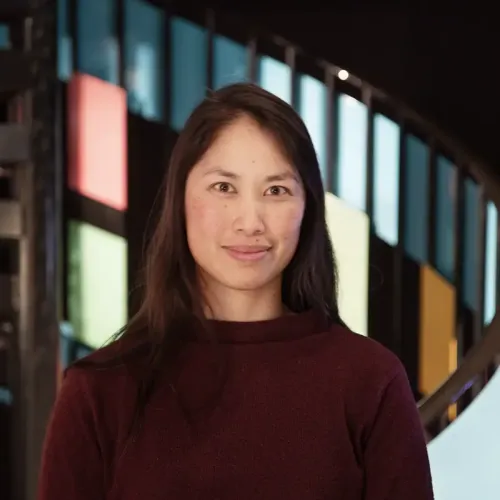
Linda

Terry

Øystein
Preparation:
Our teaching plans do not require preparatory work, but it is always useful to prepare students for a museum visit. This can increase the learning outcomes from the museum activity, and links the classroom to the museum. Here are some wondering questions for the class, which can prepare and engage the students before they learn more about the topic at the museum
Wonder question
-
What are the uses of 3D printing in today's society? Can you name some examples of products that can be 3D printed and how it affects the production process?
- What challenges can arise with 3D modeling and 3D printing, both technical and ethical? How can these challenges be handled?
Finishing work:
After the visit, you can continue working on modeling with the TinkerCad. It is web-based and free, making it easy to use in teaching.
Once students have gained some experience, they can also discuss these issues:
Discussion points:
- What is the difference between 3D modeling and regular drawing on paper or a computer screen? What are the advantages and limitations of each method?
- What are some of the materials that can be used in 3D printers, and how does the choice of material affect the properties of the finished product?

