Television signals from London, Berlin and Moscow
Scotsman John Logie Baird presented the first successful television in 1926. In large cities such as London, Berlin and Moscow, regular television broadcasts were started on the medium wave of radio frequencies. The television images could also be recorded here in Norway. Among Norwegian radio enthusiasts, the new technology received great attention, and some built their own television sets. Television was regularly mentioned in radio magazines and demonstrated at exhibitions and radio days throughout the 1930s.
But it was not until many years after the war that companies such as Klaveness Radiofabrikk, Tandberg Radio and Radionette began producing television sets. Television was not officially opened in Norway until 1960.
The engineer
Thormod Fjeld was born in 1905. He dreamed of becoming a sculptor or the manager of an electricity company. He ended up traveling to Germany and studying to be an electrical engineer. During his studies, he became interested in simple radio receivers, so-called crystal devices, and in the late 1920s he got a job as a radio salesman at Philips. He became curious about the new television technology and joined the British Television Society.
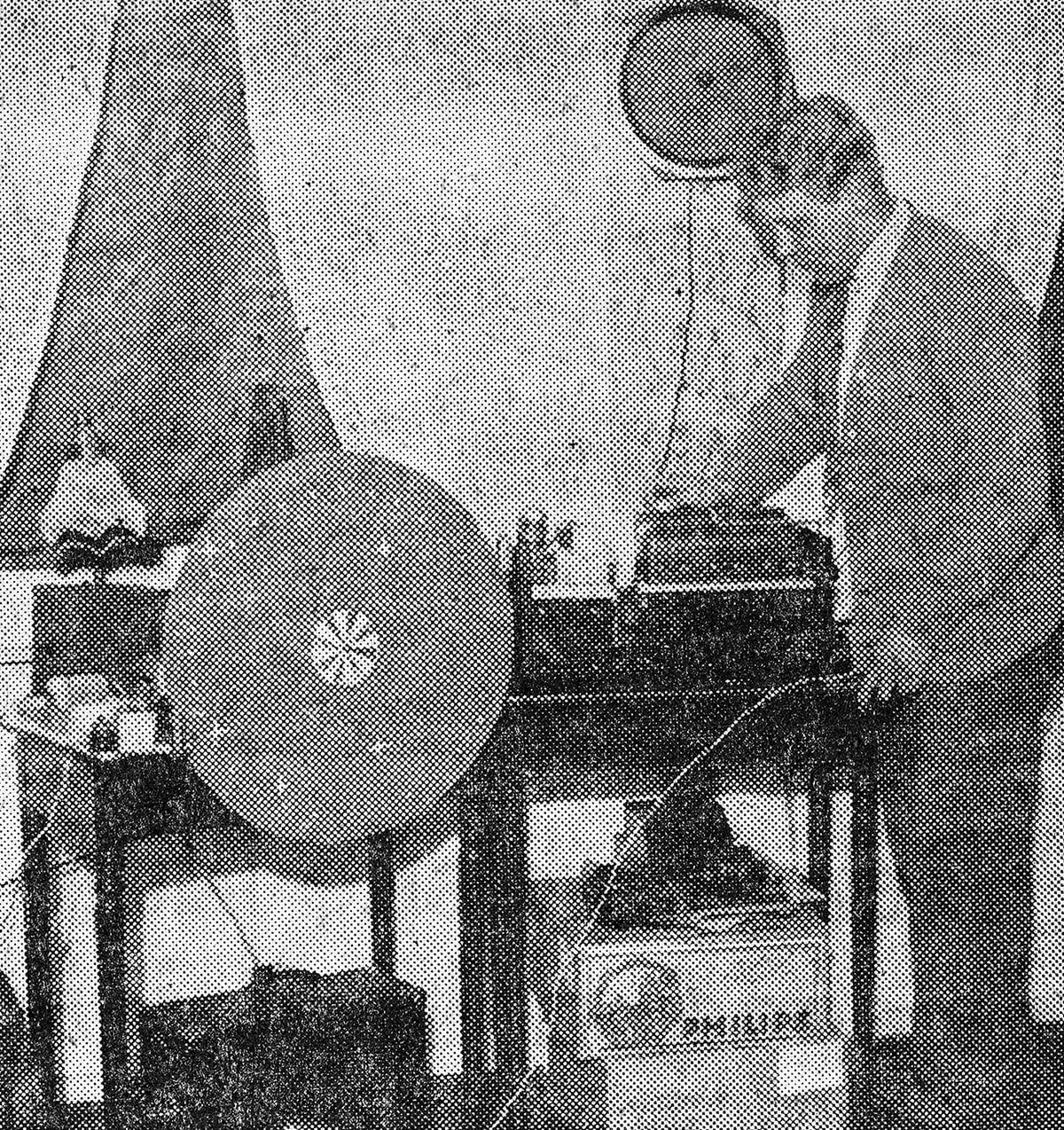
At home in his dormitory at Åsaveien 10 in Majorstuen in Oslo, Fjeld began experimenting with a television receiver consisting of a radio, a selenium photocell and a perforated disc that rotated – a so-called 30-line Nipkow disc. The holes in the rotating disc formed images on a lens when they passed a lamp behind the disc. The size of the images was 4x7 cm. The components were partly homemade, partly purchased from England.


According to himself, Fjeld is said to have demonstrated the television set for the first time in 1929. The broadcasts he received from London were between 23:30 and 00:30 Norwegian time, and he was constantly visited by friends who wanted to experience this strange phenomenon. The programs that were broadcast were mostly entertainment and revues. In 1937, Fjeld showed the set at the exhibition Liv og lyd in Oslo. By then it was already outdated. In the same year, the set was given to The Norwegian Museum of Science and Technology .
After the war, Fjeld was given responsibility for building up the Prior radio factory for the Norwegian Cooperative Society (NKL). In the 1960s, while he was in technical management, the factory produced both radios and televisions. Fjeld remained at NKL for a number of years, and towards the end of his professional life also worked with early computer technology. “It is clear that a technician’s field of interest expands in parallel with technical innovations,” he stated in a newspaper interview in Aftenposten in 1975.
The set designer
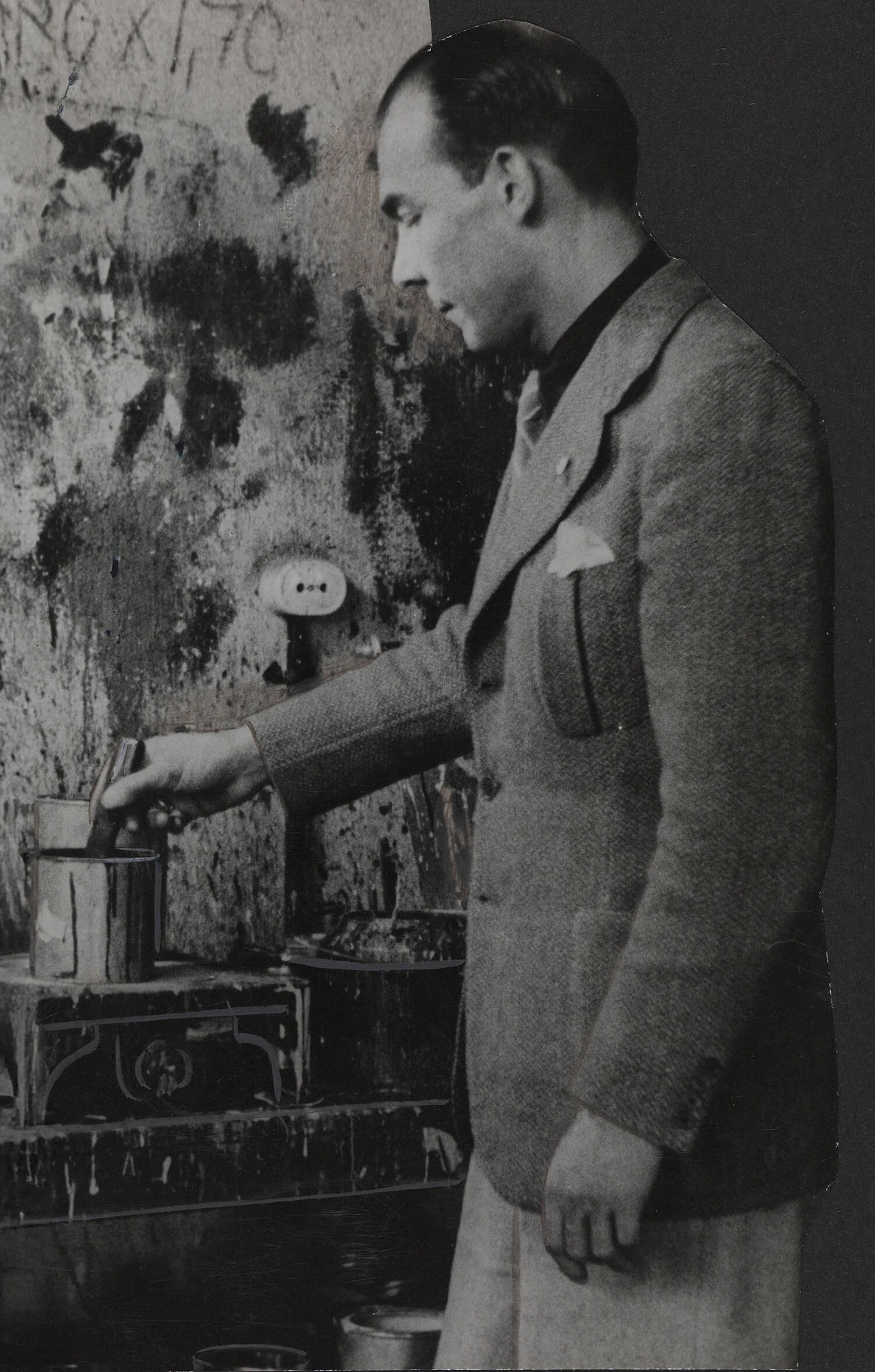
The nobleman Alexey Zaitzow was born in St. Petersburg in 1896 and fled Russia to Norway after the revolution of 1917. He was educated as an engineer and naval lieutenant, but in 1922 he began studying at the Norwegian Academy of Fine Arts with the painter Christian Krogh as his teacher. After graduating, he worked as a theatre painter and set designer at the New Theatre and the National Theatre, and contributed to renewing Norwegian performing arts in the 1920s and 30s.
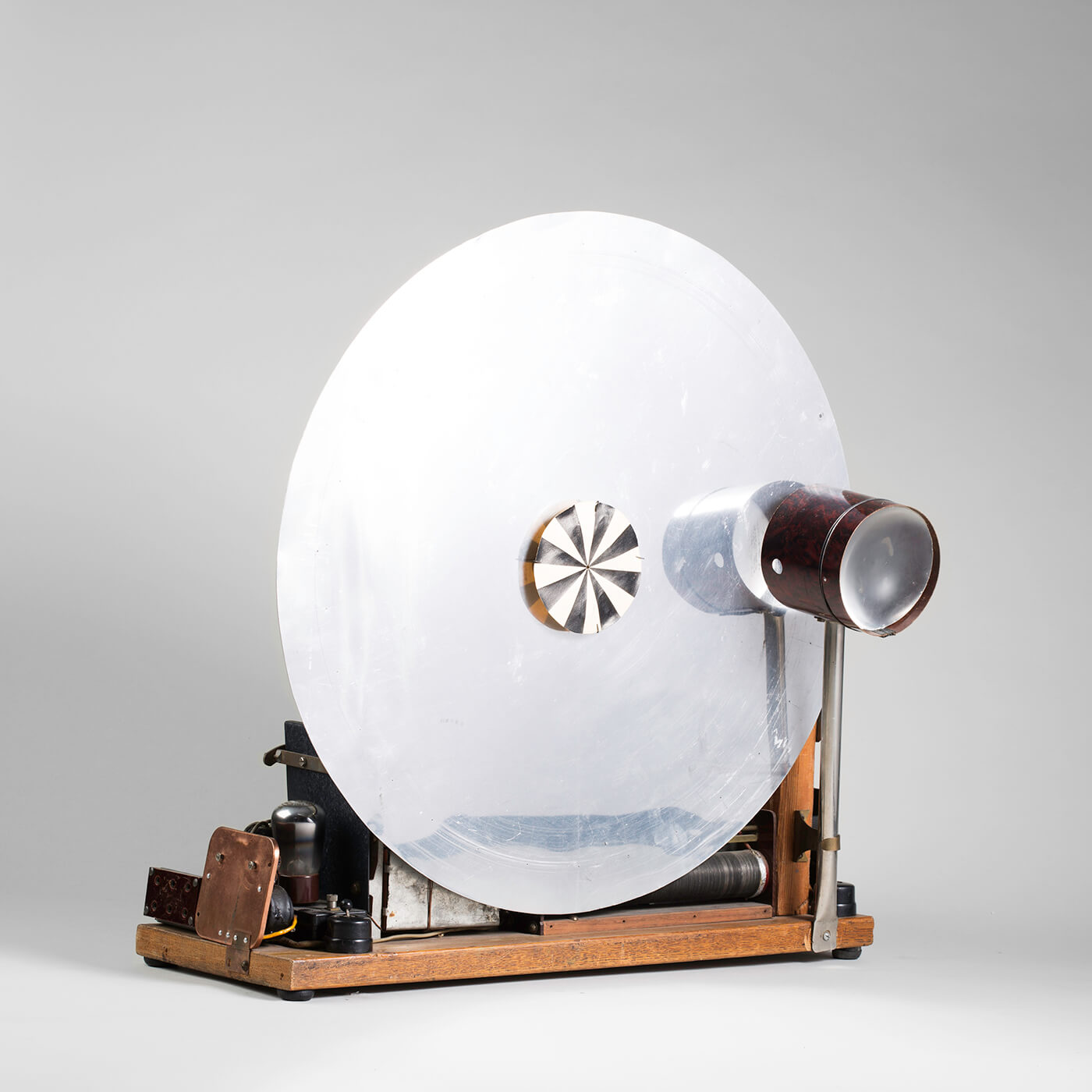
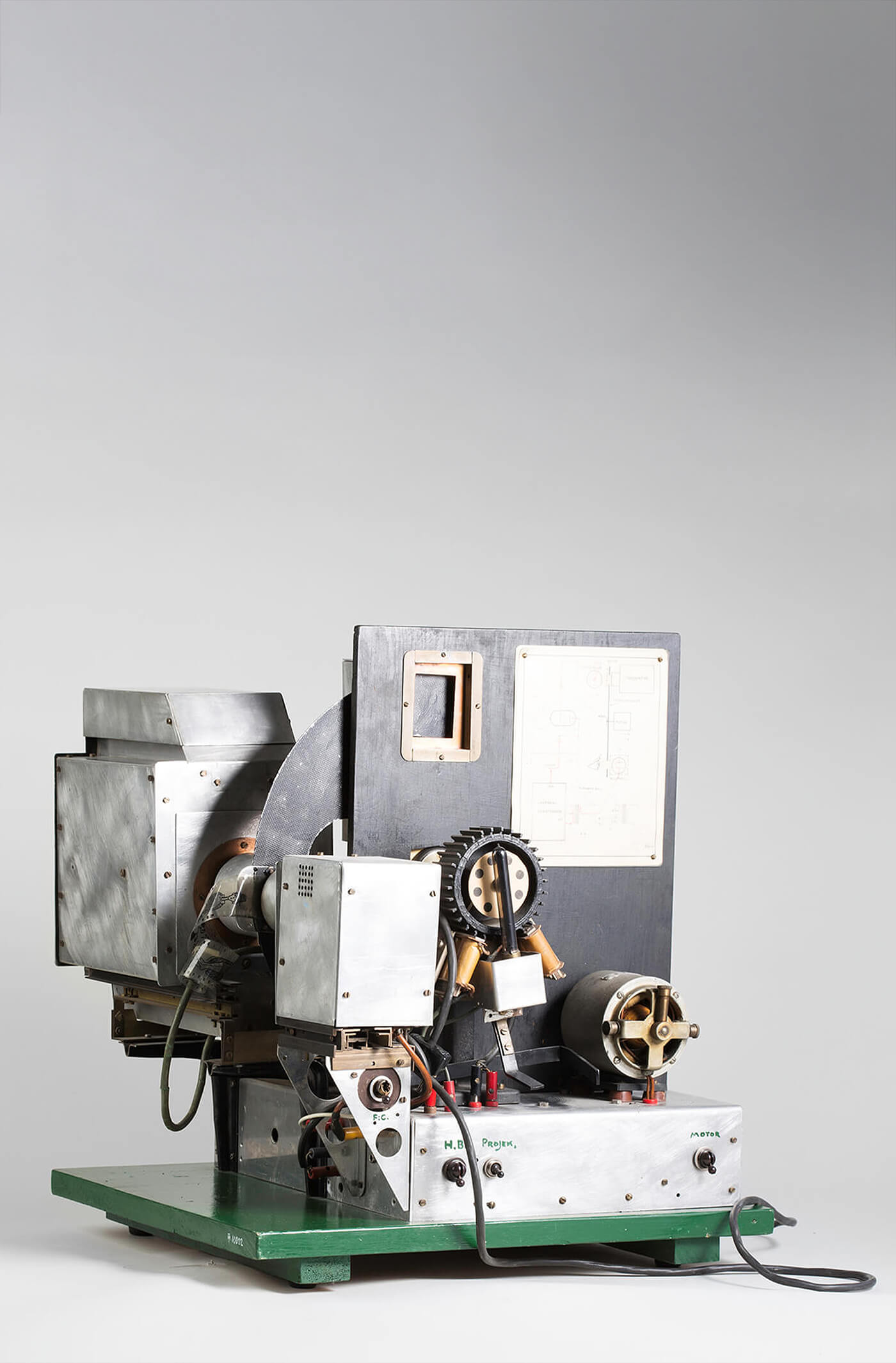
Zaitzow was also interested in radio and television. In his studio on Stortingsgaten in Oslo, he built his own television receiver using descriptions taken from Norwegian and foreign magazines. From Germany, he bought two 30-line Nipkow discs that were driven by an electric motor, and behind the discs he attached a lamp that could be adjusted according to whether he wanted to record horizontal or vertical images. A magnifying glass was mounted so that the image was 9x9 cm. A loudspeaker ensured that speech and music could also be heard.


1. Zaitzow at work as a theater painter, circa 1935, from the National Library's collection.
2. Zaitzow's apparatus in The Norwegian Museum of Science and Technology 's collection.
Zaitzow's television set was probably built around 1931-32. We will return to the exact year. Together with his wife Elsa, he watched broadcasts from London, Berlin and Moscow. Less regularly, he was also able to take in pictures from his hometown of Leningrad. In the autumn of 1933, he traveled with the architect Arne Korsmo to the large radio fair in Berlin to study the development of radio and television technology, and soon after he exhibited his television set at the annual radio exhibition in Oslo. In 1934, there was an end to transmissions on the medium wave of radio frequencies, and Zaitzow had to rebuild the set with his own transmitter. This rebuilt set is today at The Norwegian Museum of Science and Technology .
Zaitzow joined the National Socialist Party in 1941 and actively participated in the Nazi propaganda apparatus. After the war, he was sentenced to forced labor and sent to Ilebu. He directed the children's film Ten Boys and a Girl in 1944. In the 1950s, he was again allowed to work as a set designer in theater and film productions, including several of Edith Carlmar's films.
Wizards
It was not until some time after Fjeld and Zaitzow began their experiments with their television sets that this was mentioned in the press. The dates are therefore uncertain. And both have been given the credit for having built Norway's first television set.
In an article in Tidens Tegn on September 18, 1930, it was stated that Fjeld had been working on his experiments for two and a half years. That is, he was supposed to have started in the spring of 1928, but it was not said when he first succeeded in receiving broadcasts. The journalist had himself visited the dormitory at Majorstuen that autumn day and had seen live images from London, so that is at least what is certain. An article in Vårt Land from 1959 quoted Fjeld as saying that he "began to tinker with these things in 1928," while he himself stated to Aftenposten in 1975 that "I was called a magician when I demonstrated my television set in 1929."
In Kaare Stang's documentary film Z for Zaitzow from 2007, it is recalled that Alexey Zaitzow constructed "Norway's first television set" in 1928. An article in Radiobladet from 21 April 1933 also calls Zaitzow "Norway's first television amateur". However, his own account in the same magazine's Christmas issue from 21 December 1934 points to a later date. Here Zaitzow tells that in 1931 he heard a television broadcast on a radio receiver for the first time, and that this prompted him to start building a television set. On New Year's Eve 1931 he then received a package of Nipkow discs and other equipment from Germany, and some time later he was finally able to receive television images.
Insanely funny
Fjeld was probably out a few years earlier than Zaitzow. There is no indication that the two had any contact, although they may have read the articles written about them. They probably belonged to quite different circles – not least considering the artistic circles that Zaitzow was a part of. But both had engineering degrees and backgrounds as radio enthusiasts, and dreamed of the possibilities that lay in the new television technology. Zaitzow described his visions in the article in Radiobladet's Christmas issue from 1934: "I can well imagine that in a few years we will be sitting at home in lovely clean living rooms ... and watching everything we want. The best theater, the best film, interesting events move from one part of the world to another without effort – and we have a lot of fun."