Paxter and the Post Office
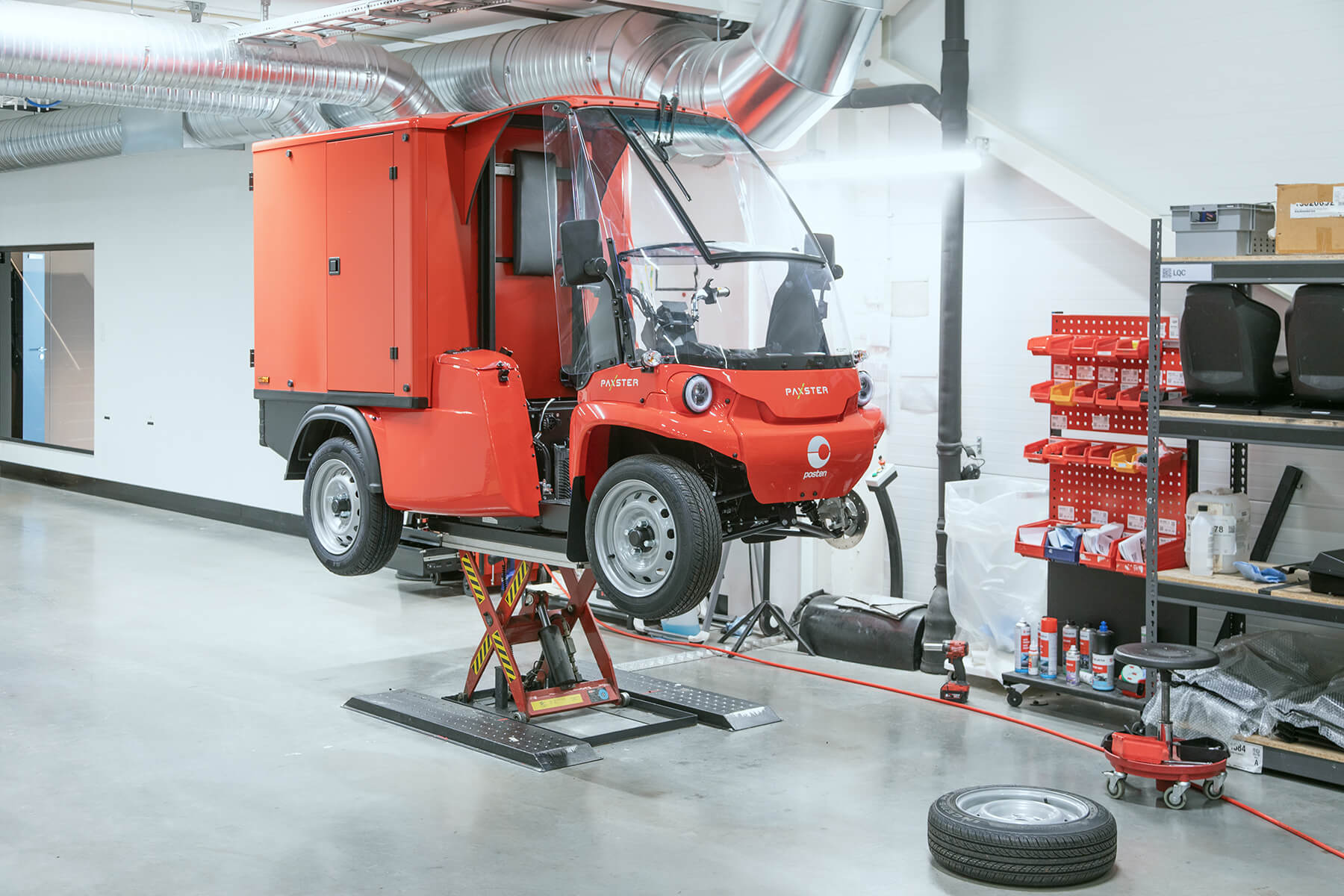
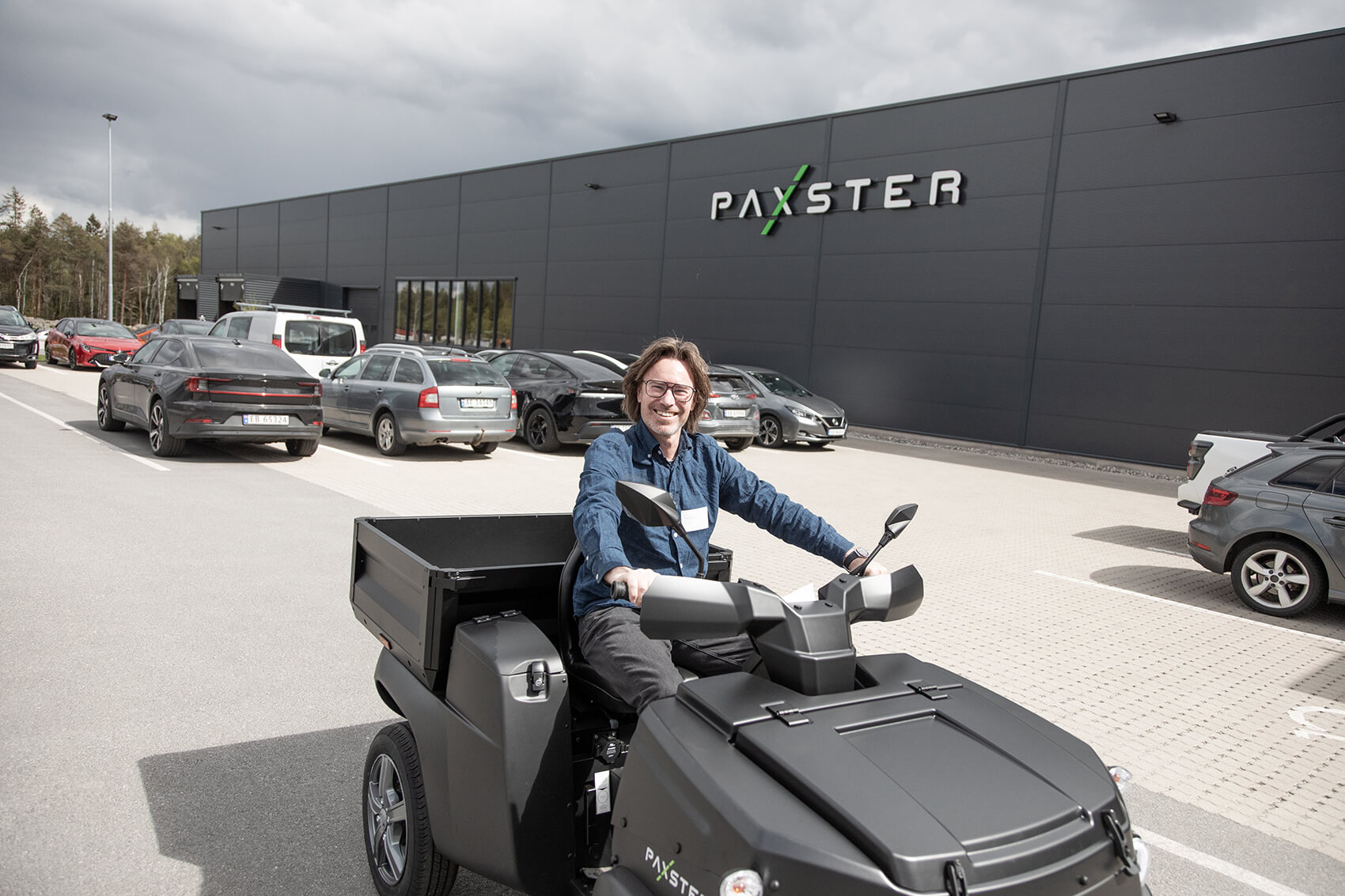
Paxster stands for Norwegian innovation and green industry. The company has sold more electric vehicles than Think and Buddy combined. Production of Paxster's commercial vehicles began in 2013, after the company Loyds and Posten had joined forces to develop a sustainable and efficient vehicle tailored to Posten's needs. In 2015, Paxster was spun off as a separate company.

New Paxster vehicles are soon ready for delivery to the Norwegian Post Office. The vehicles are designed by Bård Eker, who is also behind the design of the Koenigsegg sports car and the Hydrolift boats.
See Digital Museum for more images.
– Photo: Håkon Bergseth / NTM
Paxster's four-wheelers are doorless, making it easier for postmen to get in and out of the vehicles. The narrow width makes them easy to get around. During a working day, this saves postmen a lot of time and movement.
The vehicles use little energy and have lower production emissions than electric vans. A Paxster vehicle is charged from a regular socket and has a range of up to 110 kilometres. Paxster also emphasizes recycling by buying back old vehicles, rebuilding them and selling them at a lower price.
Since its inception, Paxster has produced a total of 4,500 vehicles and exported to 20 countries. Customers include Royal Mail in the UK, a cheese factory, a golf course and the Oslo Funeral Service – and the vehicles are no longer necessarily in the Post Office's red livery.

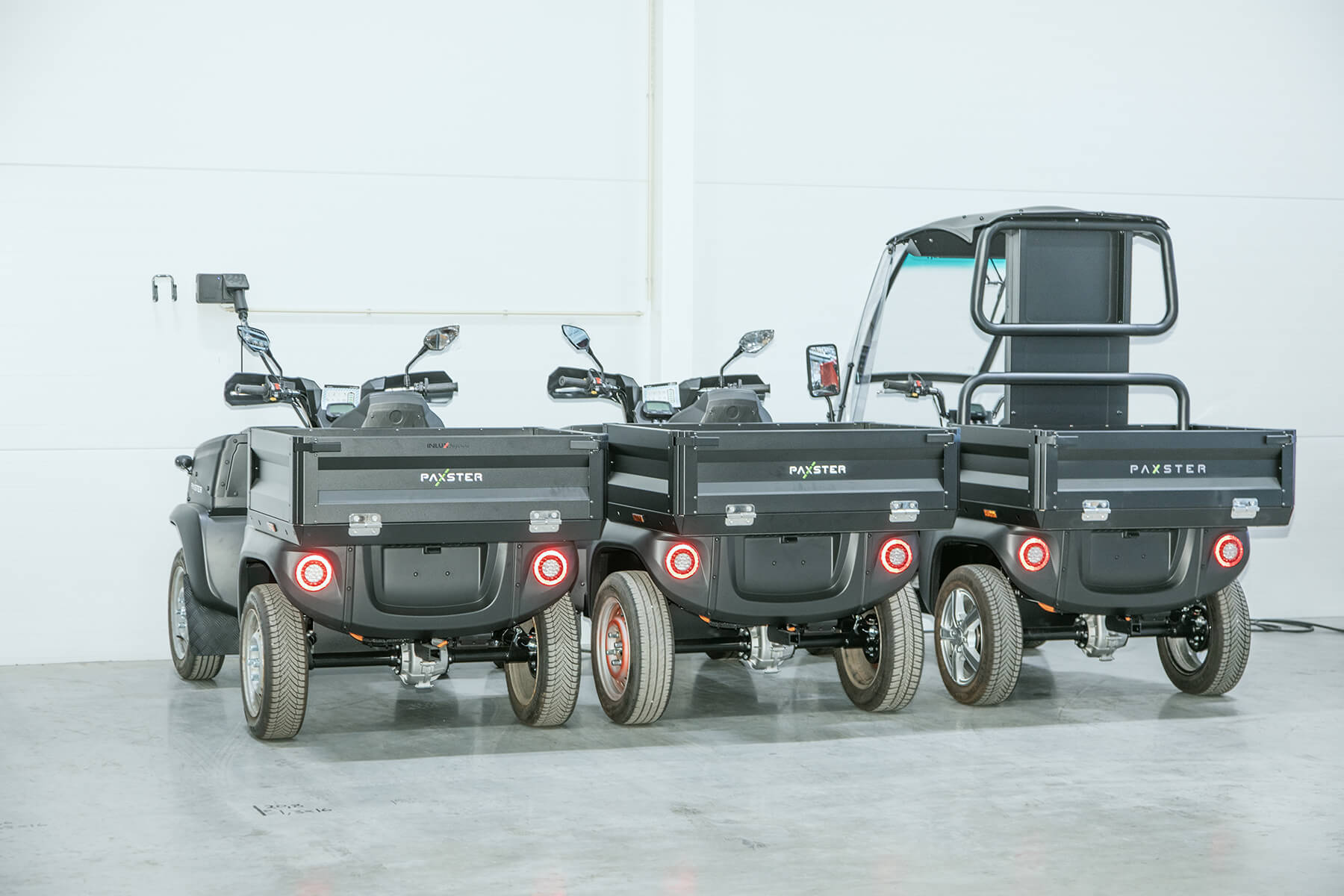
Today, Paxster vehicles are available in a variety of colors and with a choice of box or flatbed. The vehicles are produced on platforms with two different lengths, Cargo and XL.
See Digital Museum for more images.
– Photo: Håkon Bergseth / NTM
The production line
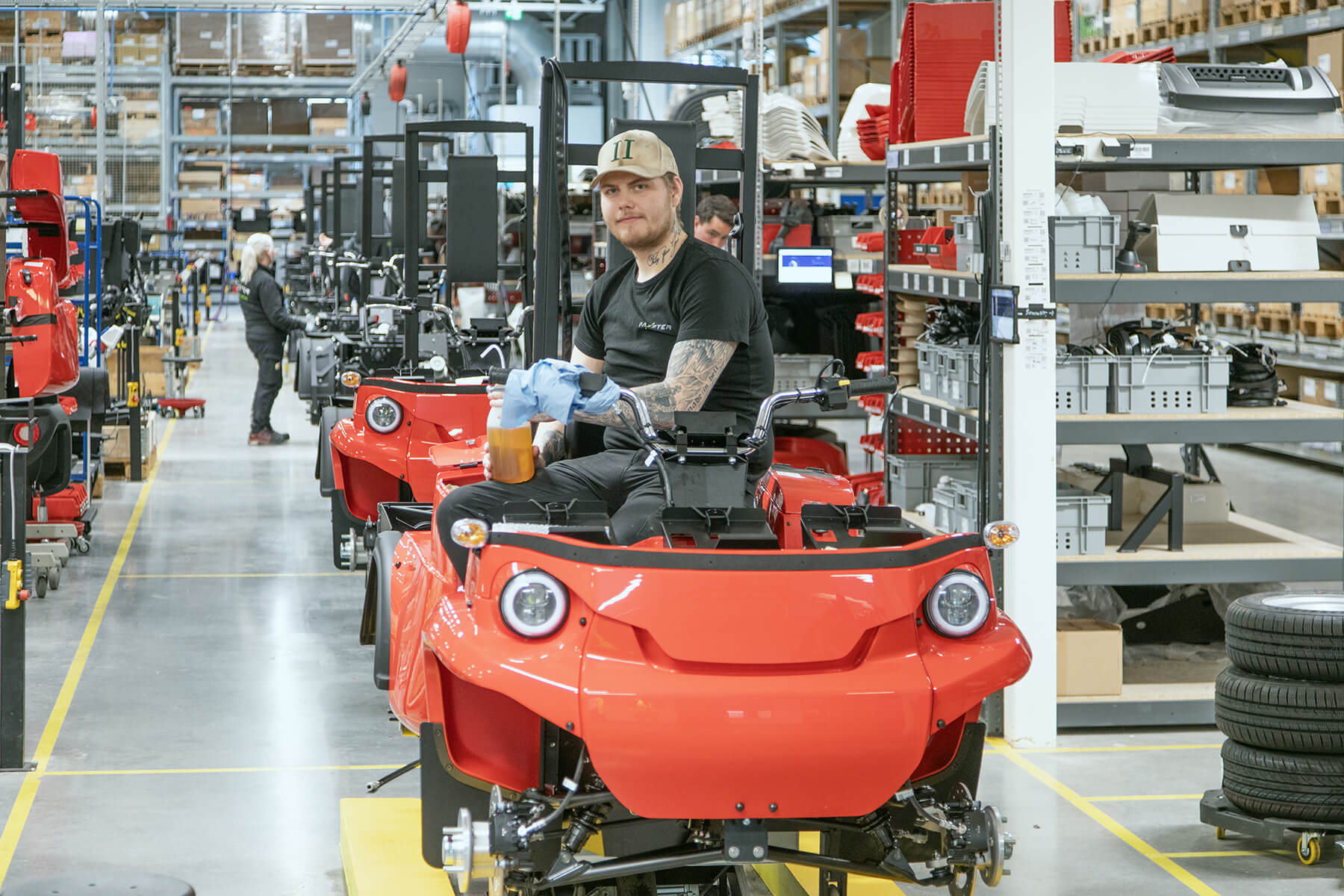
In 2025, Paxster moved into a brand new factory space of over 3,800 square meters at Kampenes in Sarpsborg. The factory space is bright and open, and parts for production are easily accessible along the walls and on shelves. A production line runs through one side of the premises, starting with the batteries and ending with complete vehicles. It's not quite like Ford's assembly line, but the principle is somewhat the same.

From the production line. In front sits Carl Mikael Mattsson. In the background are Pål Espen Malmqvist and Charlene Børmarken.
See Digital Museum for more images.
– Photo: Håkon Bergseth / NTM
A sign inside the factory says that the production line consists of 12 stations where the various parts are assembled – rear axle, front suspension, etc. The work processes should be as simple as possible: Parts are retrieved from one side of a storage shelf, while new parts are replenished from the other.
At most stations there is one person, sometimes two. When they have finished their task, the next person takes over. The chassis is on carts that are rolled from station to station on a so-called skateboard. When the vehicle is fully assembled, it is rolled into a test room where various control measurements are made. Finally, the rust treatment comes.

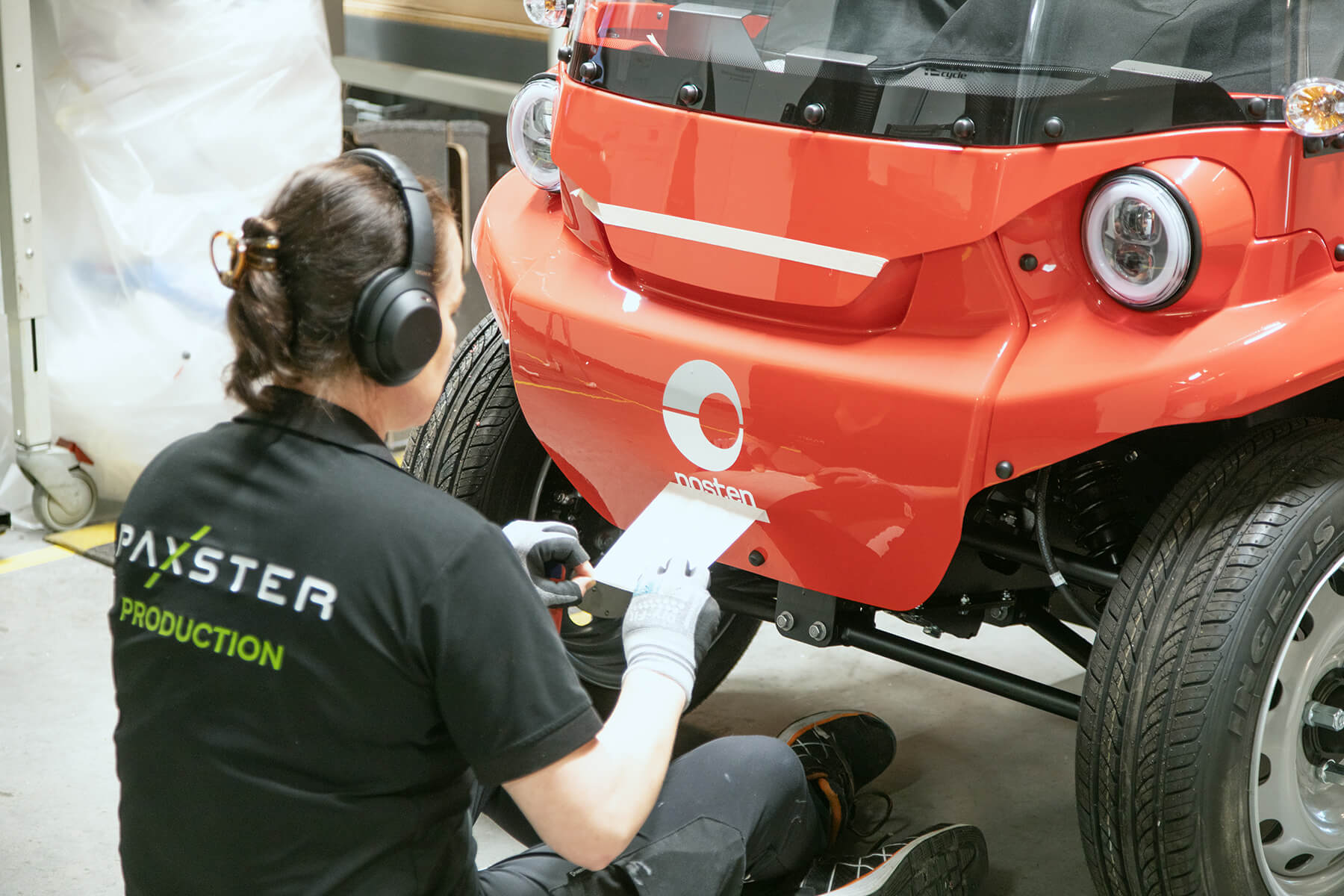
Marita Bjurgren applies the Posten logo.
See Digital Museum for more images.
– Photo: Håkon Bergseth / NTM
Made in Norway
The production line is built to produce 8–9 vehicles per day. Paxster rarely produces for stock and tries to spread orders out over time to maintain a steady production. They usually deliver standard solutions, but can also customize vehicles to customers' specific needs.
The parts used in the production come from various places. The batteries are manufactured in China, while the battery box and chassis are delivered from Loyds' factory in the neighboring building. The engines come from China, Slovenia and England, and the plastic parts from the Norwegian manufacturers Gyli Plast and Ny Plast. At least 60 percent of the costs and raw materials used in the production of a Paxster vehicle are Norwegian. Paxster can therefore use the "Made in Norway" mark of origin.
Paxster has 56 employees in Sarpsborg. In addition, the company has several service technicians working in the field. The company also has its own work program – 2ndChance – which provides opportunities for young people outside the workforce.

The Norwegian Museum of Science and Technology 's photographer Håkon Bergseth and department head Frode Weium went on a documentation mission to Sarpsborg to gain an insight into how production takes place at Paxster.
See Digital Museum for more images.
– Photo: Håkon Bergseth / NTM