American trip
Statistics Norway's first director, Anders Nicolai Kiær, worked to streamline the censuses that were conducted every ten years. Processing the collected data into finished tables was very laborious.
Kiær knew that the American Hermann Hollerith had developed an "electrical method" that was used during the 1890 US census. The method involved recording census data on a punched card and then counting and sorting it using a special electromechanical machine.
Kiær was demonstrated the machine during his visit to the World's Fair in Chicago in 1893 and decided that the institution he led should try out the system.

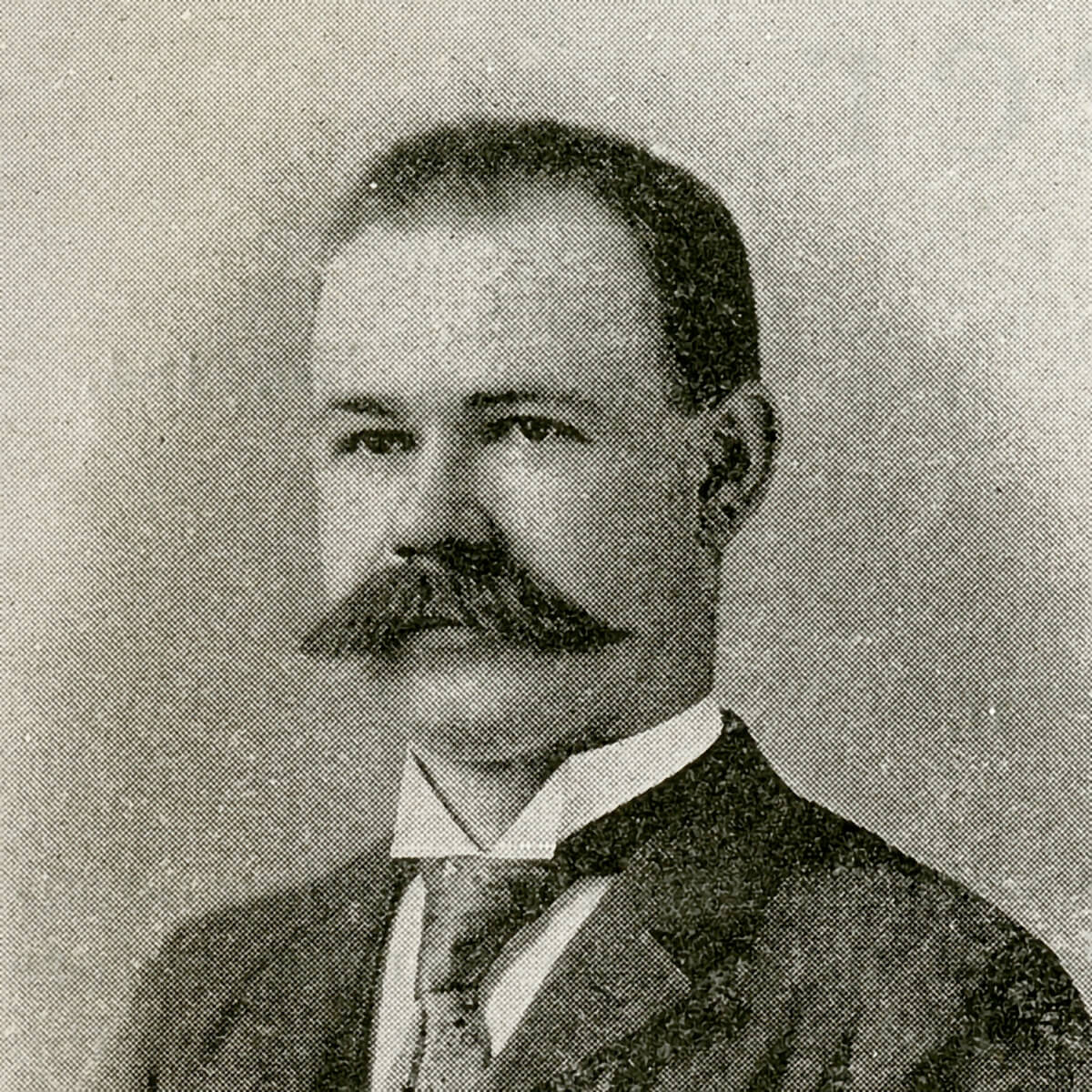
Herman Hollerith (1860-1929) American inventor and businessman.
– Photo: NTM
The first test machine arrived in Norway in the spring of 1894, and during the following year two more machines were purchased. The Storting granted the necessary funds after being convinced that the machines "would prove to be labor-saving.".
Hollerith himself visited Kristiania to help with the running-in period. It was not really about a single machine, but about several machines and devices that worked together in a system.
The electrical method
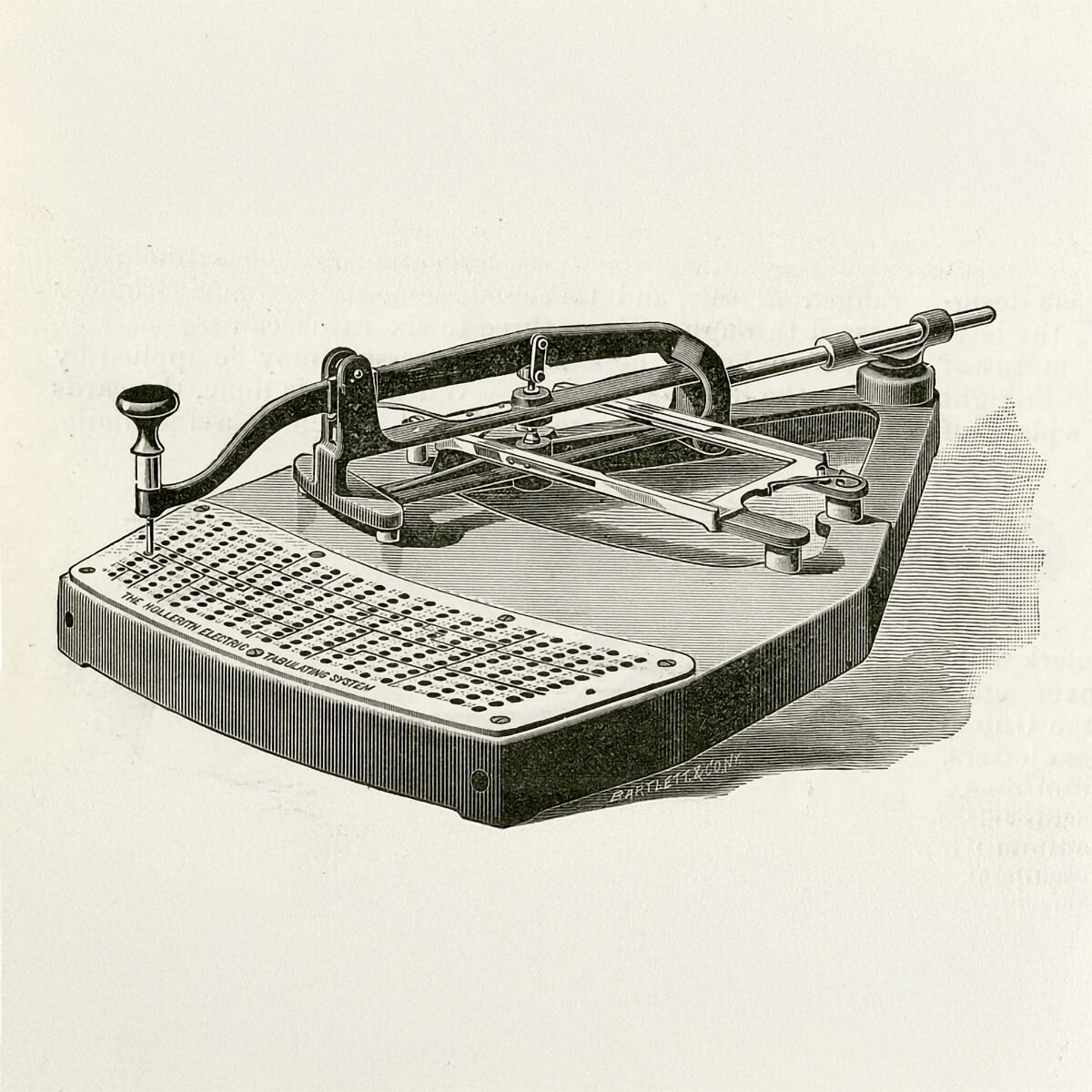
In order for the census data to be processed mechanically, the information from the handwritten census forms had to be transferred to punched cards. This was done by an operator punching holes in specially made paper cards.
On the punched cards, personal information was stored as binary codes; a punched hole in a certain position could mean “male,” while no holes in the same position meant “female.” Each individual in the census had to be represented by a separate card.
Punching was manual and took a long time. But once the job was done, the cards could be counted and sorted in various ways, based on the tables the statisticians wanted to create.


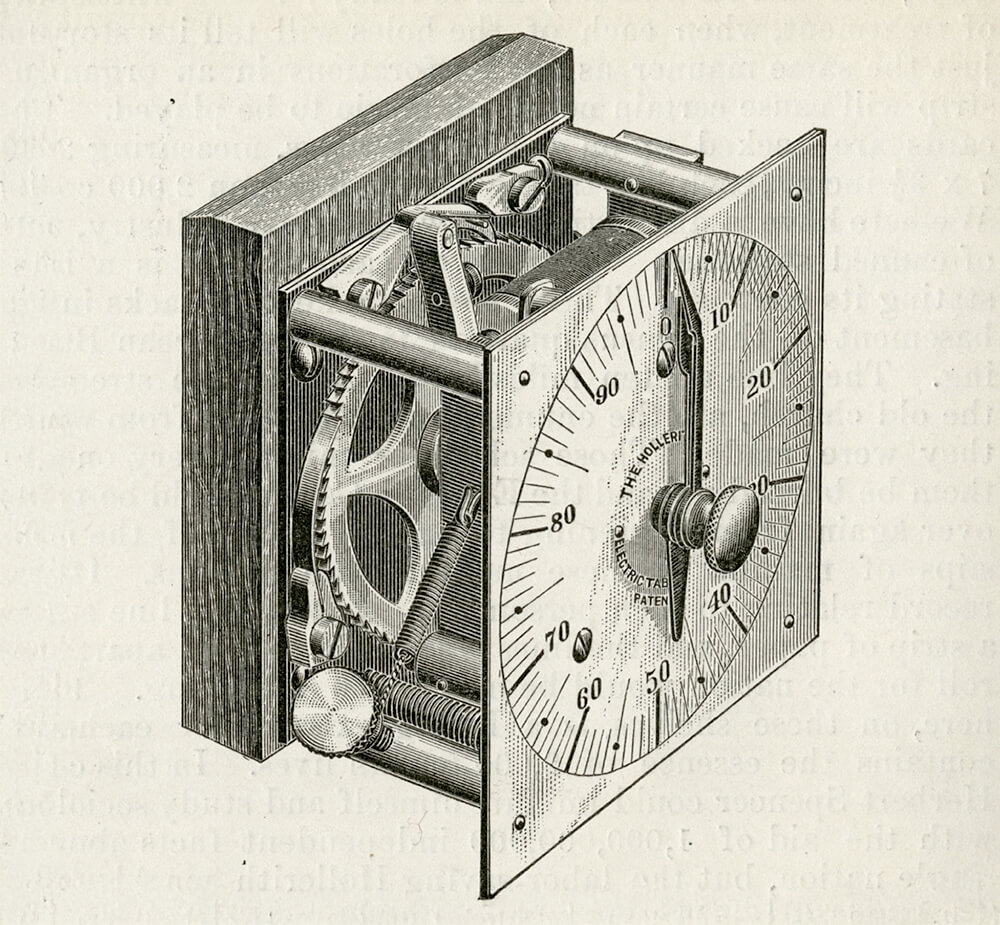
1. Counting mechanism for Hollerith punched card machine.
2. Punching device for punching punch cards.
– Photo: NTM
Counting and sorting required that the cards be inserted one by one into a special reader. When the lever on the reader was pressed, contact was made in the electrical circuits where the cards had holes, or no contact where the hole was missing.
A counting machine, consisting of clock-like mechanisms, counted the different values on the card. The machine at The Norwegian Museum of Science and Technology has 40 counting mechanisms, but there were models with far more. Using two hands, each clock could count to 100,000.
Manual summation
However, the machine had one important limitation: it could not total. Operators therefore had to pay close attention and note how many times the various counters reached their maximum. If a larger population was to be counted, extensive manual totaling was required.
While the machine counted, it could also sort. The machine at The Norwegian Museum of Science and Technology could sort the punched cards into 26 different groups. The different groups were defined in advance and required wires and relays to be connected in specific ways. The groups were established by combining different values – for example, married women living in Finnmark and working in the fishing industry could form a group.
Sorting was done by a hatch in the sorting unit automatically opening after a card was read. The operator had to move the card from the reader and place it in the open hatch.
Electric ladies
In Europe, Austria was the first to use Hollerith's system, which happened during a census in 1891. For the Statistical Office, baptism of fire came with the census in 1900. In advance, a number of new machines had been acquired, especially punching machines, and extra punch cards. Kiær estimated that 3 million punch cards were needed.

Descriptive text is coming.
– Photo: NTM
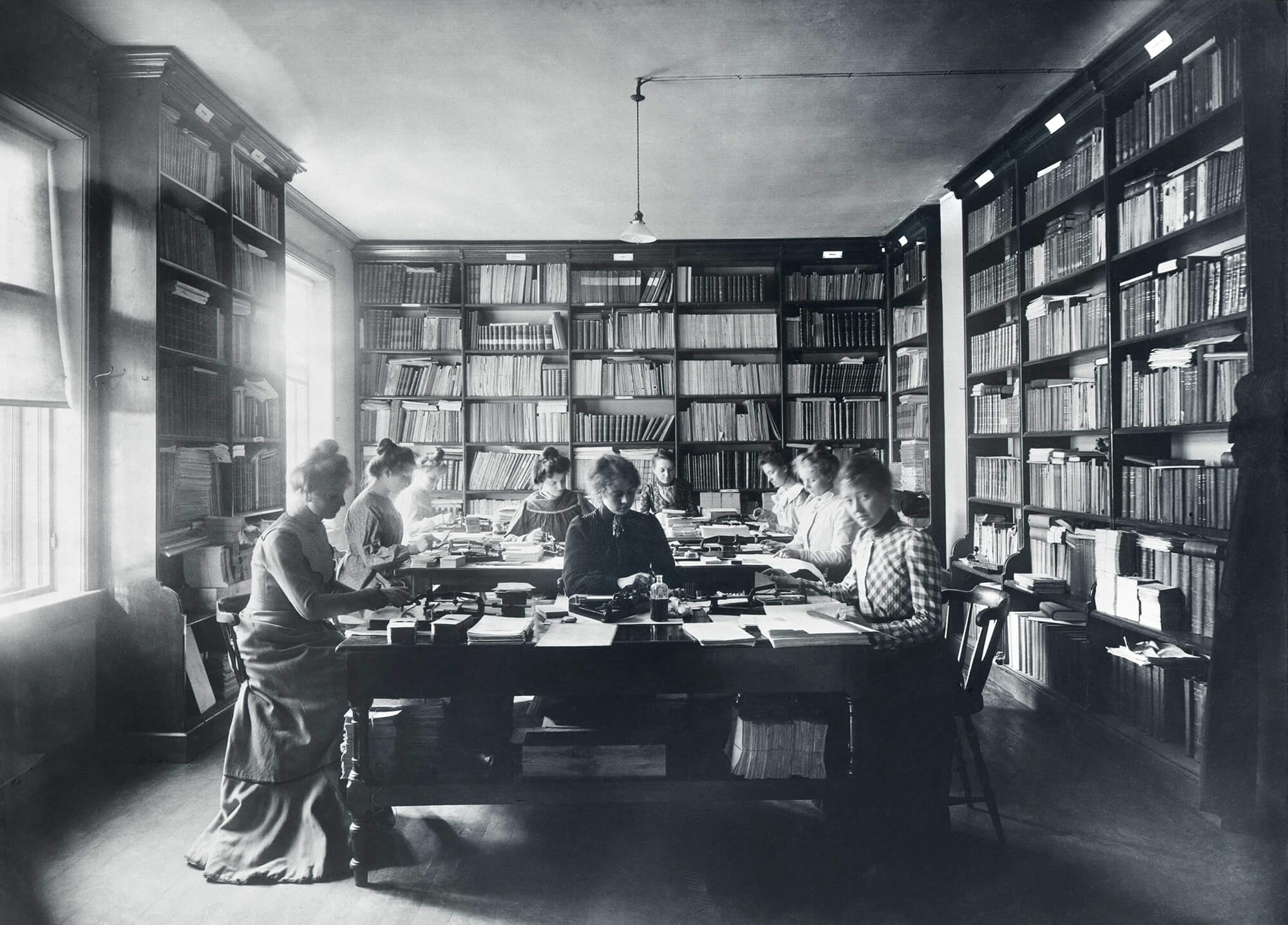
The census was conducted in December 1900, and electrical processing of the data began in the spring of 1901. The transfer of handwritten census lists to punched cards was done using 18 punching machines. 32 of the bureau’s female employees – jokingly called “the electric ladies” – worked two shifts and delivered an average of 104 punched cards per hour.
Well said!
The census of 1900 was a success. For the first time in Norwegian history, a census had been carried out with the help of electrical, machine-based data processing.
The Norwegian population consisted of 2,239,880 people, and in addition to gender and place of birth, occupation, religious affiliation, and place of residence were recorded at the time of the census. Hollerith's machine thus helped to make the population a size that the authorities could more easily keep track of.
In 1911, Hermann Hollerith sold his company to what a few years later became known as IBM. Today, the Hollerith machine is on display at The Norwegian Museum of Science and Technology .