
WEEKEND AND HOLIDAY PROGRAM
The year 2024 began with the opening of the exhibition ENERGY in the Time of Climate Crisis, which has been a central framework for many of the museum's activities this year. The exhibition sheds light on how energy and resource use have affected society and the environment, and it has inspired a number of outreach programs aimed at visitors of all ages.
In the winter holiday program, we introduced activities that were both related to the exhibition ENERGY in the Time of the Climate Crisis and engaged visitors in practical learning with the activity Solar Cell Lab. Visitors were able to explore how solar cells work by making a simple solar charger for a mobile phone, a concrete example of renewable energy in practice. Women's Day was marked with a women's history tour of ENERGY in the Time of the Climate Crisis, which highlighted women's contributions to the history of energy. An important contribution and collaboration was also a participatory project with the Environmental Agents. The activity Redd fiskene, inspired by the classic game Haien kommer, was created and has engaged many children to reflect on environmental protection and ocean ecosystems.
In addition, we organized a drawing café for visitors about nature and environmental commitment. Here, the children determined the content and led the activity, which was carried out for museum visitors in March. In the tour Who Owns Nature?, questions such as the value of natural resources, perpetual motion machines, and nuclear power were explored in a way that appealed to both children and adults.
The summer program had a rich and diverse content that was linked to several exhibitions. Regular program items throughout the summer were Energy Tour, Model Railway and Science Show. Through several alternating programs, visitors could experience Sound Lab, Windmills and Fans, Save the Bees, Micro:bit Orchestra, Rocket Workshop, Solar Charger, Lino Printing, Auto Workshop and 3-D Print a Thing. Several of the workshops were held outside on the terrace, as in 2023.
This fall we also collaborated with Kattas figurteater where we performed the performance Skyggetunnelen, which gave the children an experience of light and shadow in an interactive walk.
The autumn holiday program focused on robots, which proved to be very popular with visitors. In the Open Robot Lab, children could learn about coding through play and interaction with the robots Bit:bot, Sphero-bolt and Bee-bot. The Lego Spike challenged visitors to program a robot with drag-and-drop coding. In the tour Robotene komre, we took visitors on a journey through the history of robotics. Among the robots on display was Paro, a robotic seal that demonstrated how care technology can contribute to a better quality of life and emotional support for people with dementia. One of the days, the ROBIN (Robotics and Intelligent Systems) Research Group from UiO visited with its humanoid robot TiAGo.
In connection with the opening of the exhibition Models and Miniatures , we offered the activities Build a City of Cardboard, The Steam Railway Roller's Waltz and Inside Out with Anatomical Models. Through this exhibition, we have shown how scale and detail in models can provide a deeper understanding of the world around us and how technology and design can be used to convey complex concepts in a visually engaging way.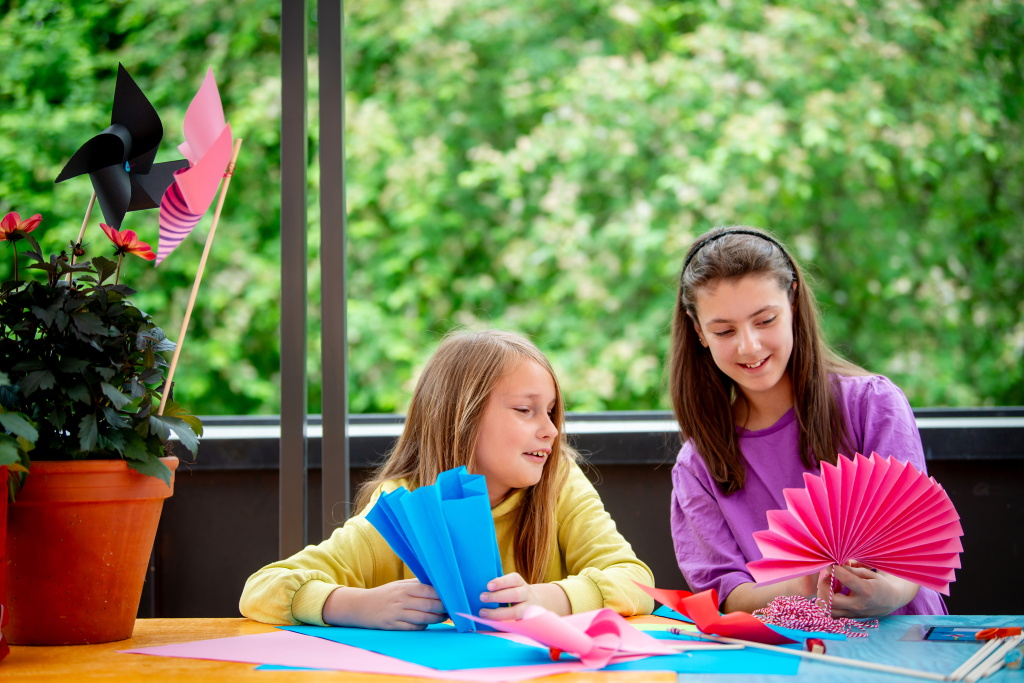 Children enjoy making windmills and fans on the terrace during the summer workshop 2024. Photo: Gorm Gaare
EXTERNAL ARENA
In addition to the number of visitors to the museum, 14,664 visitors have been registered in external arenas.
The most important arenas in 2024:
- On 26-27 October it was time again for the Oslo Maker Festivalat Deichman Bjørvika, co-organised by the Technical Museum. The festival had 20,000 visitors, which is a record number of visitors for a weekend at Deichman Bjørvika. Oslo Science Centre contributed with a reflex workshop, rocket launch, soap bubble show and redesign workshop and for the programming of the festival. The Oslo Maker Festival is organised by Deichman Bjørvika, Oslo Science Centre/Norsk The Norwegian Museum of Science and Technology and Norway Makers. The festival is financially supported by Sparebankstiftelsen DnB, Tekna and the Municipality of Oslo. In collaboration with Deichman and Norway Makers, the museum has organised the Maker Festival at Deichman Bjørvika, featuring radio-controlled cars, sand printers and soap bubbles. The festival was a success with 17,000 visitors.
- During the World's Coolest Day in August, the museum contributed with soap bubbles and activities where children could make their own reflex or program a sand printer. The event was carried out in collaboration with the Sparebankstiftelsen DNB.
- The museum participated with a science show in June at Blaker Skanse in connection with the MiniSkansen 2024 festival. Soap bubbles were blown on Children's Day at Strømsø on June 2nd and we entertained children and parents with a science show at the 5-year-old club at Brynseng School on March 6th.
- The museum participated with a science show in June at Blaker Skanse in connection with the MiniSkansen 2024 festival. Soap bubbles were blown on Children's Day at Strømsø on June 2nd and we entertained children and parents with a science show at the 5-year-old club at Brynseng School on March 6th.
- The Talent Centre in Science has three branches at Haugenstua School, Persbråten Secondary School and Hersleb Secondary School. The Oslo East project is funded by Sparebankstiftelsen DnB. In collaboration with FERD SE, The Talent Centre expanded its activities by establishing and operating two branches in Oslo; Bjerke VGS and Bjørnholt VGS. The Talent Centre also had classes in Kongsberg, Lillestrøm and Larvik.
- Teacher courses: Oslo Science Centre has had 21 teacher courses outside the building with a total of approximately 990 participants. We have trained teachers, principals, social workers, PPT and special educators in the school system.
- Critical Fashion Walk has explored what critical fashion can be by showing different ways in which fashion has been produced, presented, consumed and reflected upon, historically and in the present. Two city walks east of Akerselva on 17 and 31 October went from the Oslo Academy of the Arts via Birkelunden and the former Herkules factories to the Gunerius shopping centre and Salgshallen in Storgata. The project was initiated by curator Johanna Zanon in collaboration with the Oslo Academy of the Arts, independent artists and The Norwegian Museum of Science and Technology, and supported by KORO.
- Marie's Tour: Oslo Museum's Industrial Museum at Sagene organized Marie's Tour every Thursday, which is a city walk with industrial history as a theme in the local area by Hønse-Lovisa's House and Beyerbrua. The museum's conservators held two walks in 2024.
- In the summer we had a week-long stand with an electric promo bike at Visit Oslo, where we showed fun experiments and met many tourists. The following week the bike was used in several places in the city, used with a skeleton in the box.
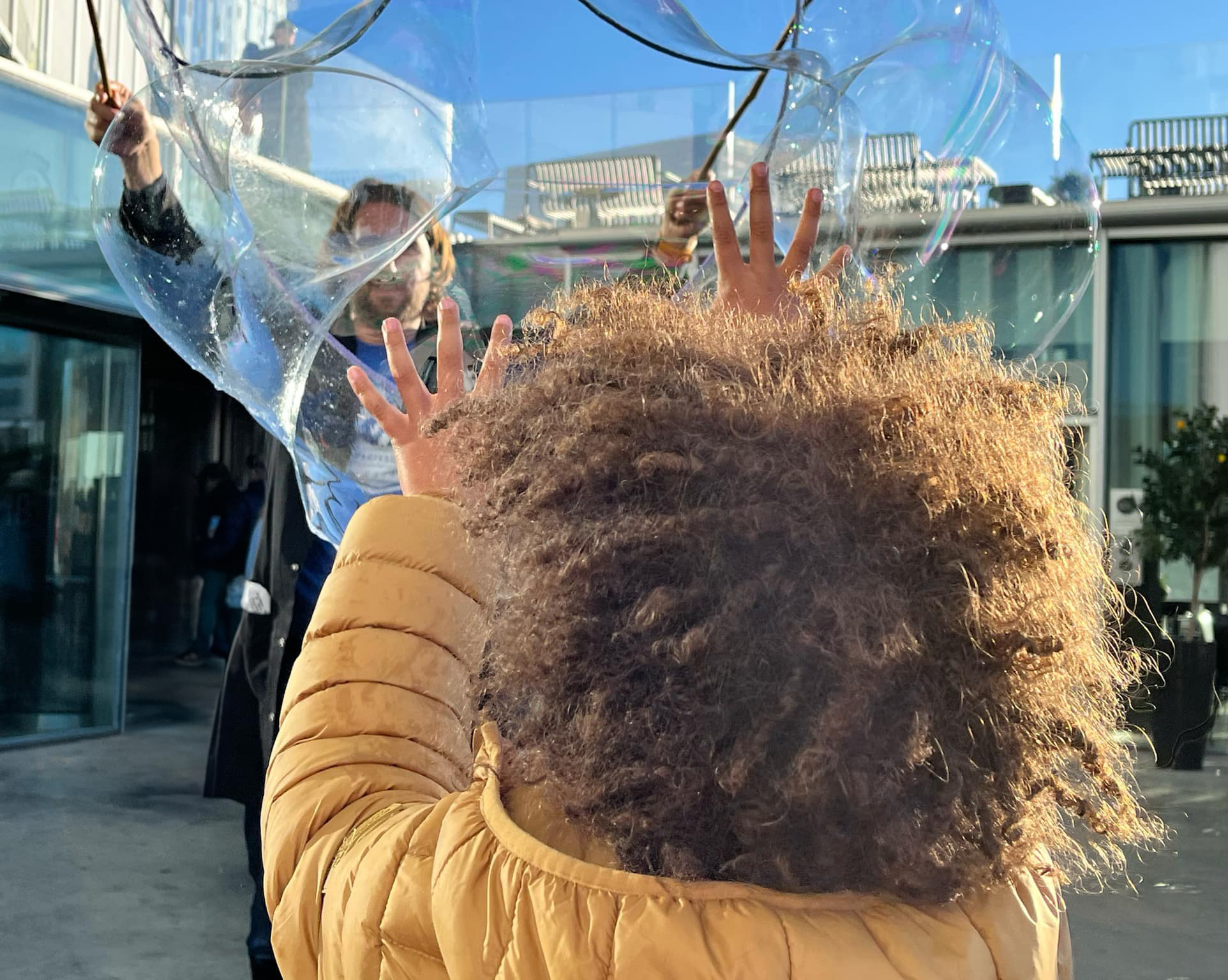 Many wonderful bubbles have been created, like here at the Oslo Skaperfestival. Photo: Joachim Solum
In 2024, the school visit was 45 705 at the museum and 4,482 in arenas outside the museum. In total, the school visit ended up at 50 187, which was 3,352 more than in 2023. The museum had the best school visit since 2016 in 2024. The kindergarten visit ended at 7,561, which was a decrease of 671 from 2023. A total of 39,782 pupils, Teachers and kindergarten, 2,56.
The school offer extends over several subjects, such as science, social sciences, arts and crafts, math, and health sciences. The new offers in 2024 were the melting point (Energi, 5-7., 8-10. Step), assignment (body and health, 5-7. Step), Super: Bit Tegnerobot (programming, 6th step), self-driving car (KI, 8-10. Step, VGS), Heritage and Genetics (Biology, 10. Steps, VGs). In addition, soldering of dicocule (technology, 5-7., 8-10. Step) was reintroduced in the program. Of the new offers, it was super: Bit Tegnerobot that had the most orders. The museum also organized this year, research square for students in collaboration with UiO. 450 pupils with teachers, from 2nd stage to vgs, visited the museum that day.
The Industrial Revolution was the most booked offer in 2024, which has had a good increase from 2023. As in previous years, the Science Show has been popular in the museum's peak season for school visits, which is the last four weeks before the school summer holidays. The most popular theme was programming, which was divided into 10 different learning offers. Super:bit - intro to programming in particular has been well-received. Astronomy was also a popular theme. Astroamfi, which was reintroduced in the fall of 2023, has become one of the most visited offers.
The learning offer for kindergartens was Exploring Electricity, Dragen Berta Mysterium and Smittsom. The latter was taken off the program again due to resource challenges. Dragen Berta was the offer with the most bookings, 839 children participated in total. The museum has had a decrease from kindergartens, a total of 1,115 children participated in a learning offer, a decrease of 423 from 2023.
The subscription scheme for Nordre Aker continued in 2024. The scheme gives the district's schools and kindergartens free entrance throughout the year. 4849 Pupils and teachers took advantage of the offer, a decline of 835 from 2023. 2 103 kindergarten children with teachers visited the museum in 2024 via the scheme, an increase of 7 from last year.
 Photo: Lars Opstad
Events
The event program will actualize the museum's exhibitions, research, collections and archives. During 2024, the following events were conducted, many in collaboration with others.
Exhibition openings
On January 25, the museum celebrated the opening of the new permanent exhibition ENERGY in the Time of the Climate Crisis. Sámi Parliament President Silje Karine Muotka presided over the ceremonial opening. Moutka also participated in a panel discussion with Professor Dag O. Hessen and UNICEF Ambassador Penelope Lea. The exhibition's two curators, Senior Curator Ketil Gjølme Andersen and Exhibition Educator Jan Alfred Andersson, also contributed from the stage, as well as head of the collection group at The Norwegian Museum of Science and Technology Thale Sørlie and climate expert Annam Chaudhry. Director Frode Meinich's entrance went smoothly with contributions from the Norwegian Model and Steam Association and the guests also had a chance to play during the opening party. Developed in collaboration with Stereo productions.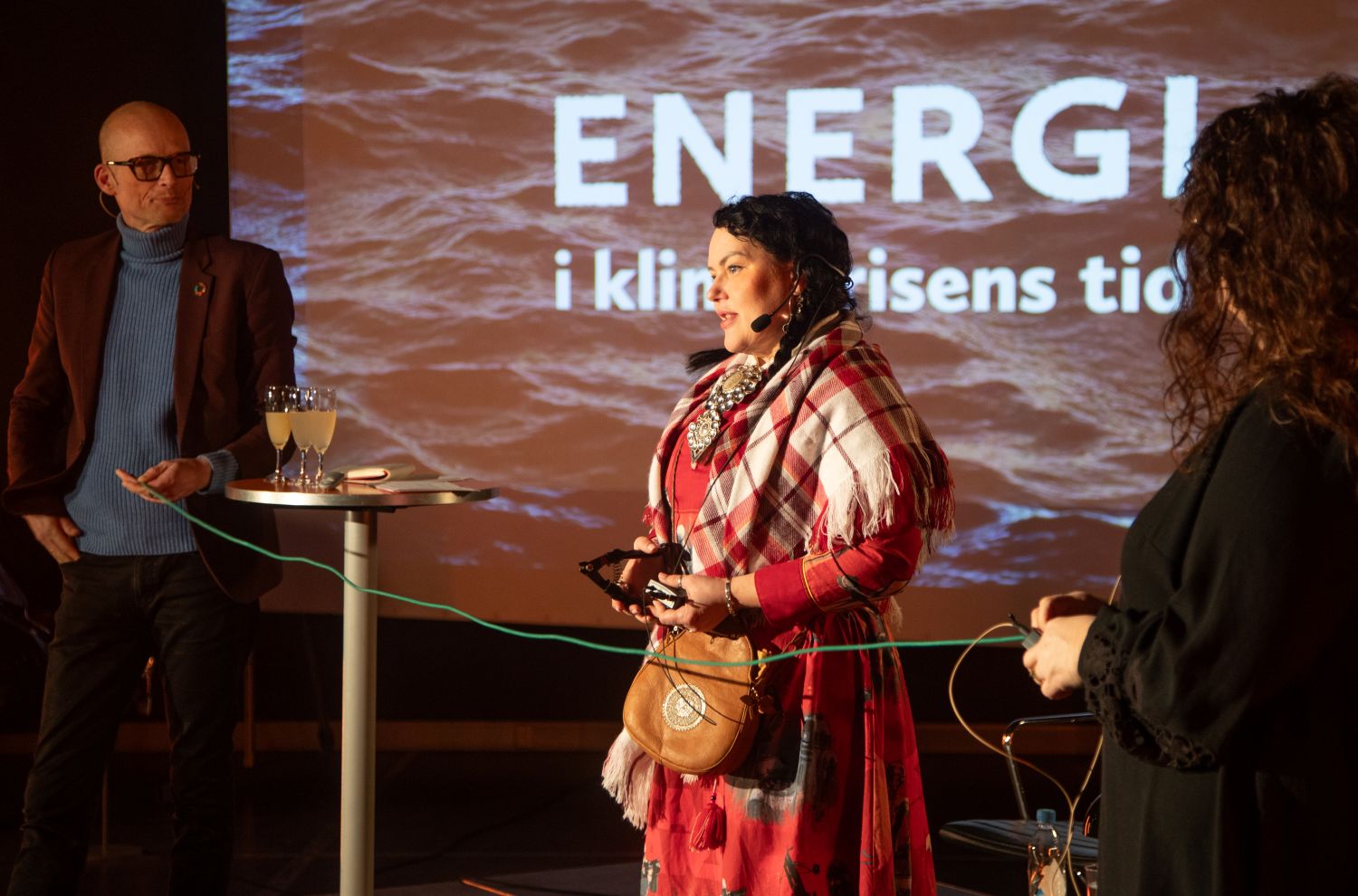 The Sámi Parliament President opened the exhibition ENERGY in the Time of the Climate Crisisat the end of February. Photo: Håkon Bergseth
On November 23rd, we opened the exhibition Models and Miniatures with speeches by director Frode Meinich and project manager Frode Weium. The young people Kirsti Eidhammer Kopperud and Emre Evensen Sørlie cut the ribbon and paid tribute to the gigantic dollhouse in the exhibition with a poetry recital. Afterwards, there was free access to the exhibition and a large activity program, including a fast-paced car race at Damstredet Racing/Asker Bilbane. The model railway was driven by knowledgeable staff, a miniature city was built in cardboard, the boilers were fired up on miniature steam railway rollers and the tour Inside Out gave those who wanted a closer look at the medical part of the exhibition.
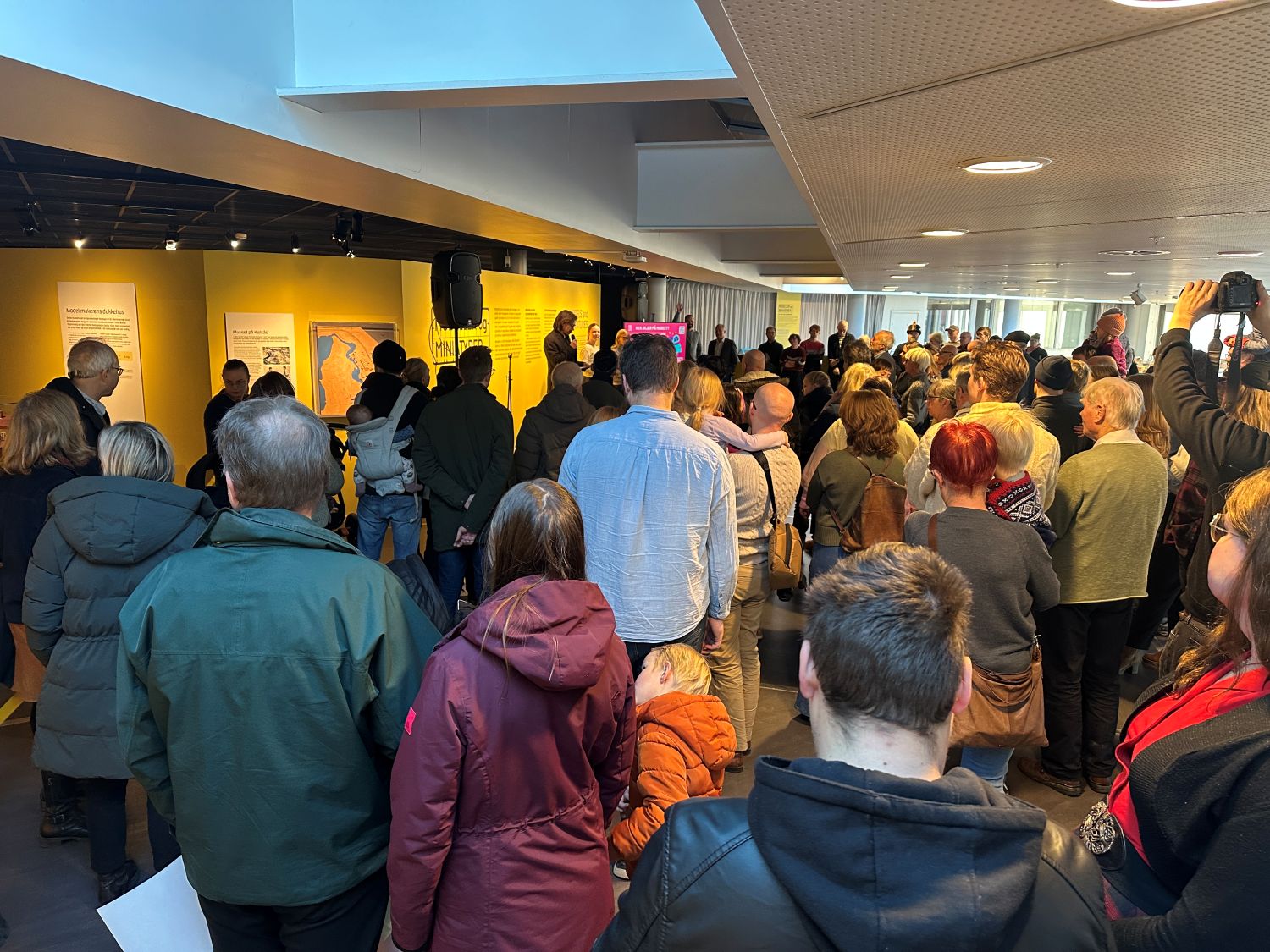 Crowded at the opening of Models and Miniatures! Photo: Jill Bottolfsen
LATE
The museum organized the evening format SENT for people over 18 years of age four times in 2024. The program included presentations, demonstrations, workshops, tours, museum quizzes, games, mini-concerts, film screenings, DJ sets, soap bubbles and Abel's bar, and it also included open meetings and conversations about technology and politics. The experimental computer science zone from the Department of Computer Science was a regular feature with the humanoid robot TIAGo and the industrial robot Universal Robots UR5. SENT was thematically linked to the exhibitions I/O and ENERGY in the time of the climate crisis, as well as Halloween.
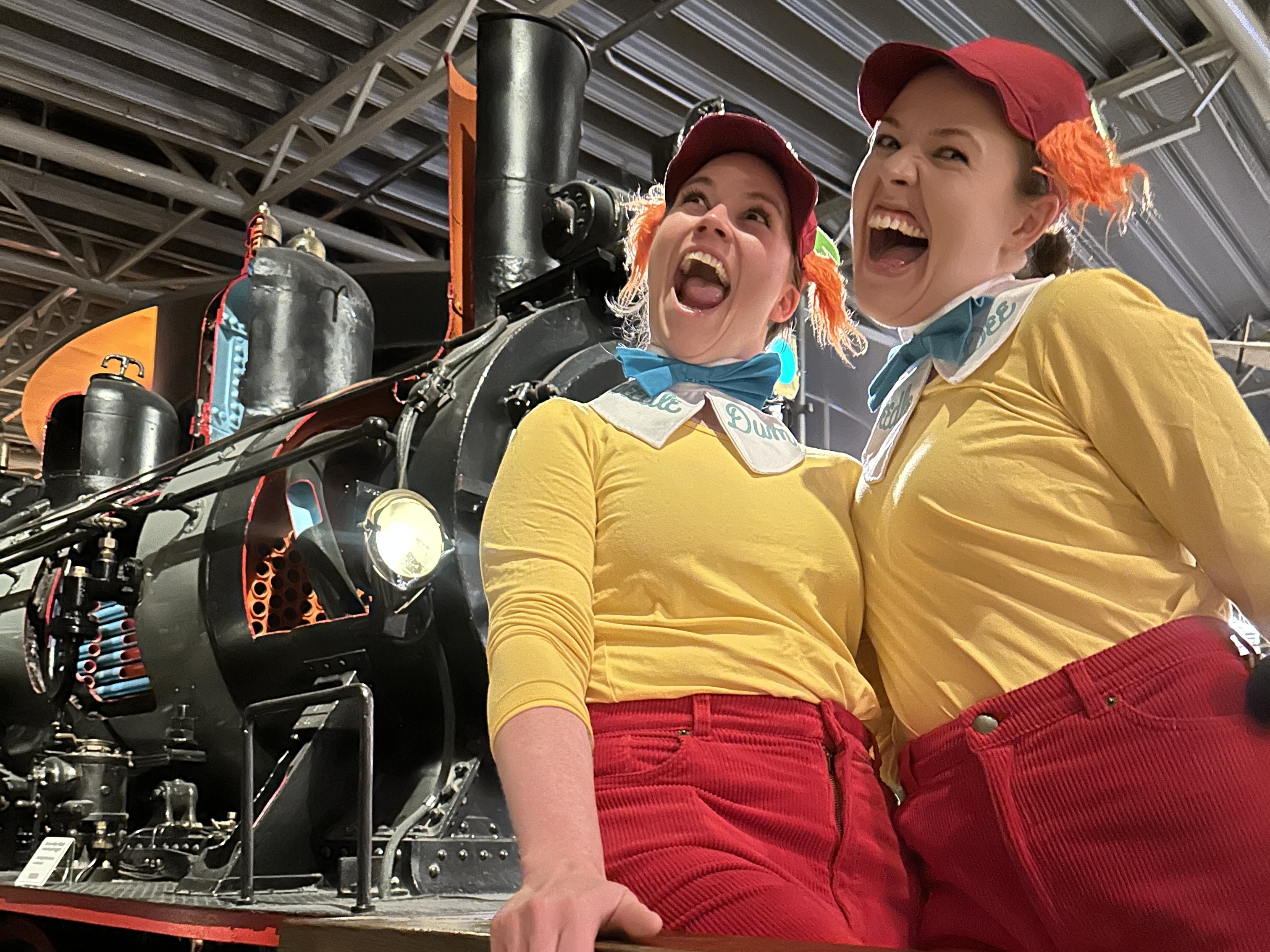 Guests during the Halloween celebration at the museum. Photo: Jill Bottolfsen
Calls in I/O
In collaboration with two research projects at UiO, the museum developed a new conversation format for research dissemination. At SENT in February, visitors were invited to talk about their experiences of an increasingly digitalized everyday life together with researchers from the projects Private Lives and Digitox, UiO.
Professor Marianne Lien, project manager for Private Lives, introduced Gullestad's ethnographic classic Kitchen-Table Society , which had given its name to the format. The conversations took place at staged kitchen tables in the museum's exhibition and took questions from the research as their starting point. The aim was to create an intimate atmosphere and promote an equal exchange of experiences between the participants. The conversations also became part of the research projects. The conversations were followed by a related stage conversation between reindeer herder Kate Johanne Utsi and Professor Marianne Lien about how digital technology affects the interaction between humans and animals.
Debates and conversations to energy in the time of climate crisis
In March, oil and climate policy were the topic of the new conversation format Kitchen-Table Society on SENT. Here, participants shared stories and reflections on, among other things, the oil fund's investments and ownership in global companies and how oil is portrayed in the media and literature.
The talks were followed by a stage conversation between Bård Lahn, researcher at the TIK Center for Technology, Innovation and Culture at the University of Oslo, and Ketil G. Andersen, curator of the newly opened exhibition ENERGY in the Time of Climate Crisis, about how the new energy exhibition created with the climate crisis as a starting point is changing the narratives about Norwegian fossil fuel production at the museum.
At SENT in June, the topic was nuclear power, and at the top of the program was a debate on whether nuclear power can play a role in the solution to the environmental and climate crisis. The panel consisted of Sunniva Siem, professor of nuclear physics and head of the Nuclear Center at UiO, Jonas Kristiansen Nøland, researcher in energy engineering at NTNU, Lars Borgersrud, author of When Norway Wanted to Become a Nuclear Power, Andreas Sjalg Unneland, parliamentary representative for SV, Tobias Stokkeland, leader of Grønn Ungdom, and Bård Standal, vice-president of Renewable Norway. The debate was led by Lars Ursin from the Norwegian Climate Foundation. Before the debate, the art documentary film Burial shown and Nils Bøhmer from the Norwegian Nuclear Decommissioning spoke about Norwegian research reactors. The evening ended with Nuclear Stories – a tour of Norway's nuclear power history, from heavy water to the Kjeller reactor and today's debate, led by the energy exhibition's second curator, Jan Alfred Andersson.
In September, a panel conversation on artificial intelligence (KI) and climate was conducted, which illuminated resource scarcity and climate and environmental costs of using KI, as well as what role KI can play to solve the climate crisis. Participants in the panel were Signe Riemer-Sørensen, research leader at SINTEF, Gro Sandkjær Hanssen, researcher at NIBR and professor of urban and regional planning at NMBU, Trym Ae Lindell, PhD candidate in AI at OsloMet, and Birgit Oline Kjerstad from the SV, the Municipal and Public Administration Committee. The chair was Jan Alfred Andersson.
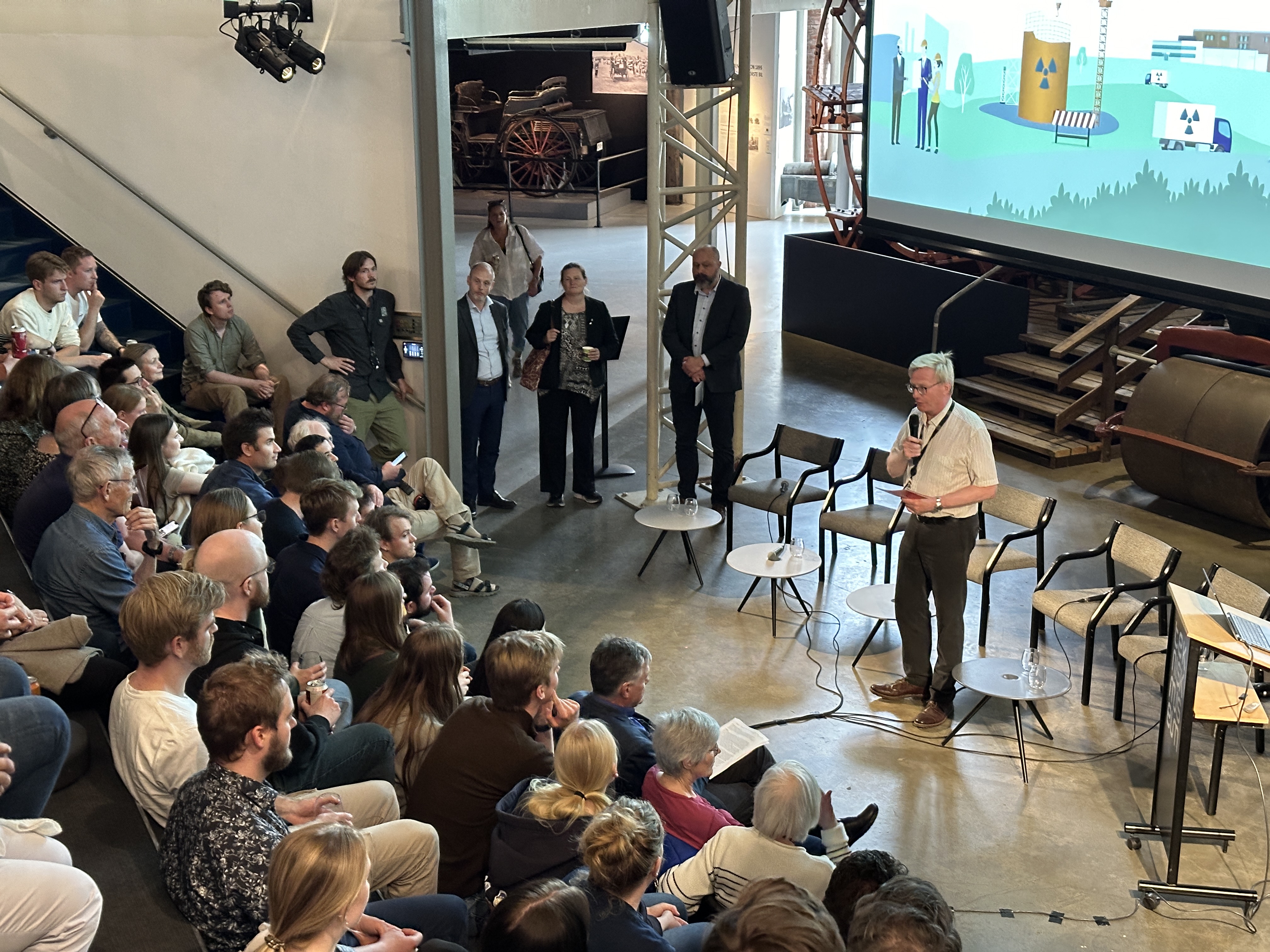 Nuclear power debate at the museum. Photo: Jill Bottolfsen
Halloween
On the last SENT evening, October 31st, the museum went dark for Halloween. The museum displayed spirit photographs from the museum's photo archive, horror movie classics and a self-playing piano. Visitors experienced claustrophobia in Lille Klaus, our safety maze, as well as fear of heights in VR. Soap bubbles were conjured up in the dark, and Son made his hair stand on end with his Van der Graaff generator. One of our curators shared the story behind a human skeleton in the collection. We voted for the best Halloween costume, while DJ Pavel Plastikk played horror disco. The evening ended with a quiz about spiritualism, mysteries and scary inventions and a science show.
Girls and technology
Think Tech Camp was held at the museum for the eighth time 8. And August 9, 2024. It is a free summer camp for 150 girls aged 13-18 organized by thinking-the Tech network for women.
Girl Tech Fest was held at the Museum for the fourth year in a row October 22.150 Girls from 5th steps participated in workshops who gave tastes on how to join in and shape the technology of the future.
Digitization and Equality Minister Karianne Oldernes Tung and program manager Selma Ibrahim visited the event. Girl Tech Fest is a collaboration between the National Center for Science Recruitment, ICT Norway, the Oda network, think-the Tech network for women, and the museum.
Aid Technology
During the event Talk to Your Eyes, invited The Norwegian Museum of Science and Technology visitors to explore and try assistive technology such as eye control, switch control and graphic character support. See section Diversity and inclusion.
Research Days 2024
In collaboration with the Faculty of Medicine, the Department of Psychology, the Pharmaceutical Institute and the Faculty of Dentistry at the University of Oslo, we conducted research square on 20-21 for the third time. September. 1600 people, including 600 school students visited the square at the museum. They met 12 research environments from UiO who engaged with demonstrations, simulations and creative experiments.
As part of the Research Days, we also collaborated with the Center for Digital Life (NTNU, UiO, UiB, SINTEF, OUS, NBMU and UiT) A lecture by system biologist Eirini Tsirvouli on research on digital twins and use of data models to treat patients.
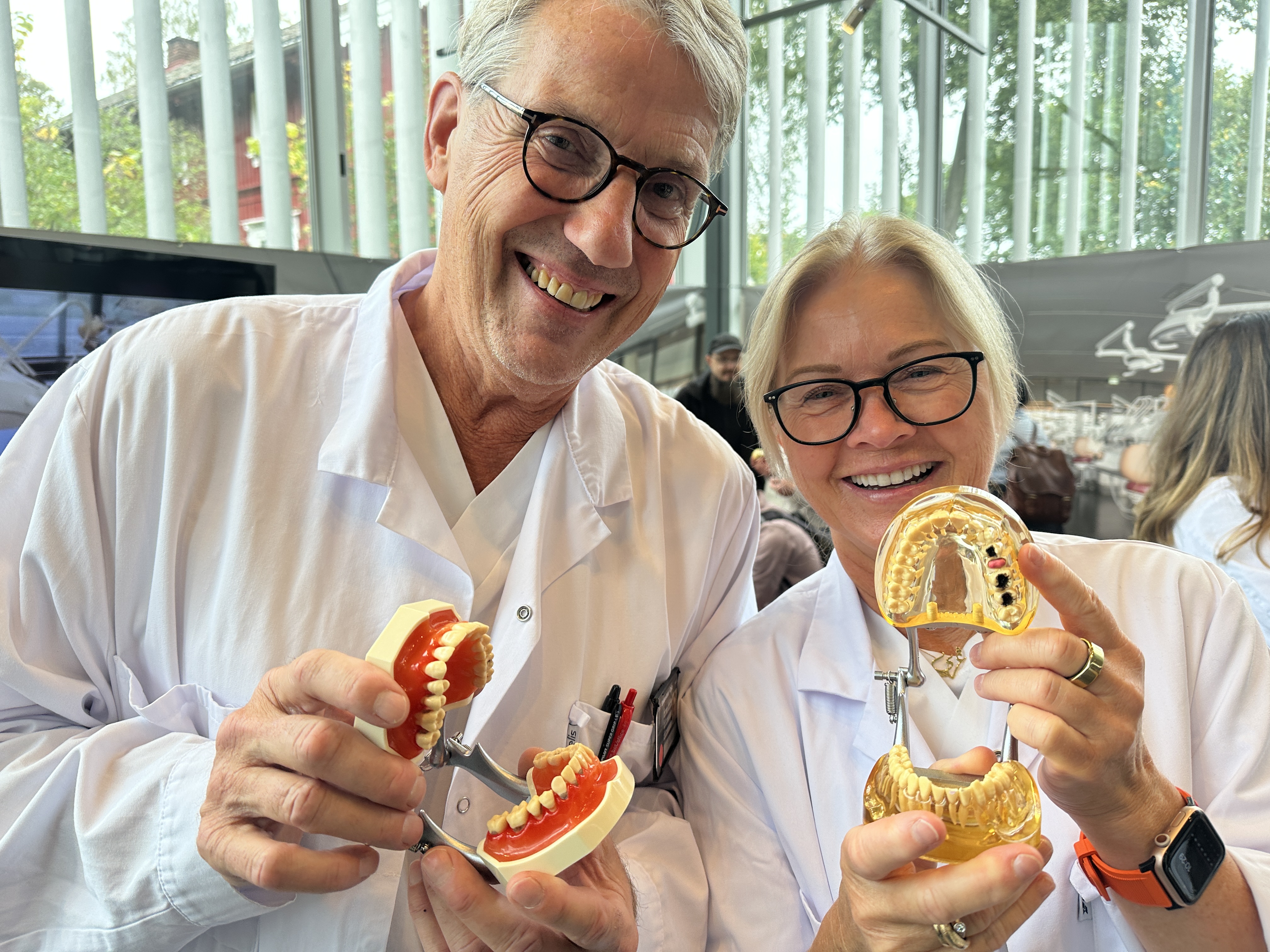 Dentists Morten Hanstad and Gry Steinsvoll Prøsch from the Faculty of Dentistry during the Research Square in September. Photo: Jill Bottolfsen
Late Night Thursday
During the year, the museum has been open until 7 p.m. on Thursdays, with the exception of the summer holidays and Christmas. In our creation workshops, we have offered visitors to try out AI-based drawing tools and program sand printers and robots. In addition, we have had classic analog board games and LEGO building tables as social activities, and at the end of the year, Damstredet racing/ Asker Bilbane and the museum itself invited to a car race in the newly opened exhibition Models and Miniatures.
On April 25, Hege Duckert gave the lecture "Deciding on life" about Katti Anker Møller's fight for all women's right to obstetric care, contraception and abortion. The museum also presented the Maternity Home exhibition in the exhibition Life and Death, Medical Museum.
Technology Thursday
Technology Thursday offers a series of lectures that provide current insights and historical views of technology development and its importance in work and everyday life. The topics include infrastructure, industry, research, medicine and health, natural sciences and engineering. The lecture series is a collaboration between The Norwegian Museum of Science and Technology , the Technology History Group at Tekna, NITO – Oslo branch and The Norwegian Museum of Science and Technology 's Friends Association. This year's nine lectures were:
Reindeer herding and drones – a revolution? by Marianne Lien, professor of social anthropology, Department of Social Anthropology, UiO.
Offshore wind power – past, present, future by Simen Moxnes, civil engineer, new energy systems at Equinor.
The history of railway signals – a safe journey from flags to electronics byOlav Kallerud, civil engineer in technical cybernetics and signal advisor at Rambøll.
The Caravel and the tinkerers by Hans Arnegard, aircraft mechanic and pilot.
TEKNA 150 years by Pål Nygaard, historian and associate professor at BI Norwegian School of Economics.
From the industrial city of Christiania to deindustrialized Oslo by Dag Andreassen, historian and conservator at The Norwegian Museum of Science and Technology.
Remote Towers - Remotely controlled towers in aviation by Linda Salte, Technical Lead and Anne Birgitte Sætrum, Operational Lead, AVINOR Remote Towers Program.
Towards a new Viking museum by David Hauer, responsible conservator for the SGO project at the Museum of Cultural History.
Models and miniatures by Frode Weium, department head and exhibition project manager, The Norwegian Museum of Science and Technology.